

I’m still trying to go out to run every day.
But it’s not the same.
It takes longer to clear my mind, relax my muscles and get into a flow. I just want to breathe deep.
I’m hardly releasing any endorphins – they’re depleted – along with the good snacks, peanut butter, and The New Yorker.
Running now has a laser focus. I must avoid other bodies.
It’s a strategic maneuvering to stay away from everyone.
Every one.
Kinda like a military exercise, twitchy and tense and adrenaline-fueled.
Or like a crazed interpretative dance, with hip-swivels, and sidestepping, and even complete “turn-around and go back” moves.
But if it’s a dance, it is one choreographed to the metronome of fear.
click, click, click. click
A Swiss clock.
A lock step.
A bomb.
These days we all want to get out – to be with friends and family.
To touch.
We know we are lucky, but activity feels so tightly censored.
Wariness.
Introspective extroverting.
Caution.
Today, a father lazily cycles in loopy circles in the middle of our street, with two young daughters trailing.
They shriek, and I notice the new chrome shine of their bikes.
Dad corrals them away from me, and they toggle off, with the neon handlebar streamers breezing in their wake,
There’s the grey-haired man with his elderly German Shepherd. He generously pulls the leash tight to his side, his eyes crinkling in a smile above his mask.
I see some neighbors taking their daily jaunt, I haven’t really talked to them in years. When did Kay go completely grey?
I pass a tall, beautiful Duke student, She has golden legs and her blonde ponytail bops cheerfully.
She moves over to make a wide circle, darting out into the road, gracefully.
Why is she happy? Why is she still on campus?
I love her pink tie-dyed headband. I want one.
I see a young couple. The man is wearing huge headphones, and he dances in broad, lunging, hip-hop type steps.
Knees wide, head dipping, his arms swoop like a crane taking flight. He circles her as she walks. And she smiles.
And I smile too.
I have seen all these people before.
And I have never seen these people before.
But the waves, the nods, the gestures, the smiles – they help fill in what has been scratched away.
They put flesh on the leanness of seclusion, they buffer the coldness of screens, and the dirge of media news.
They help me forget about the black scrim of our world’s despair.
At least for an hour.
I comply, making space, simply watching.
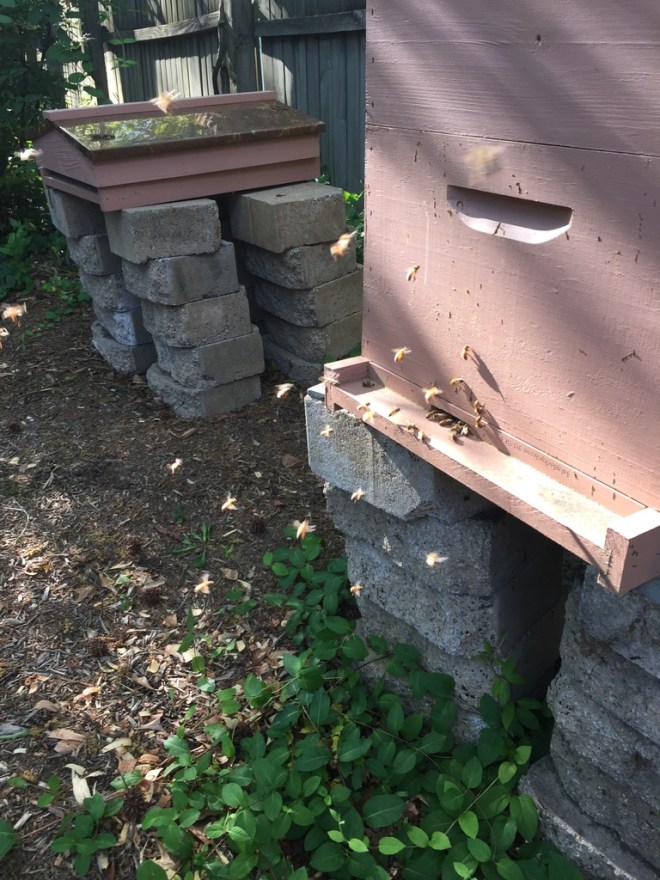
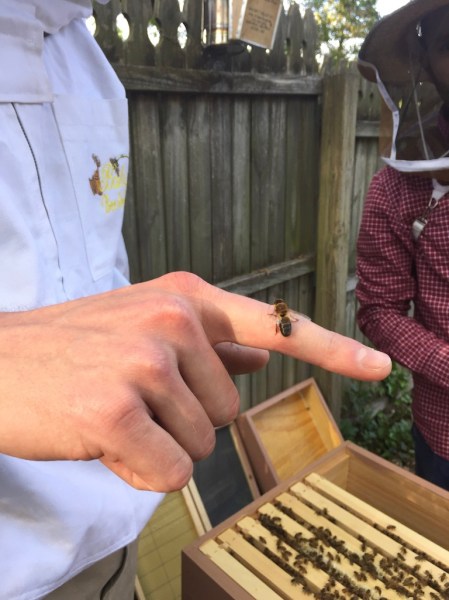
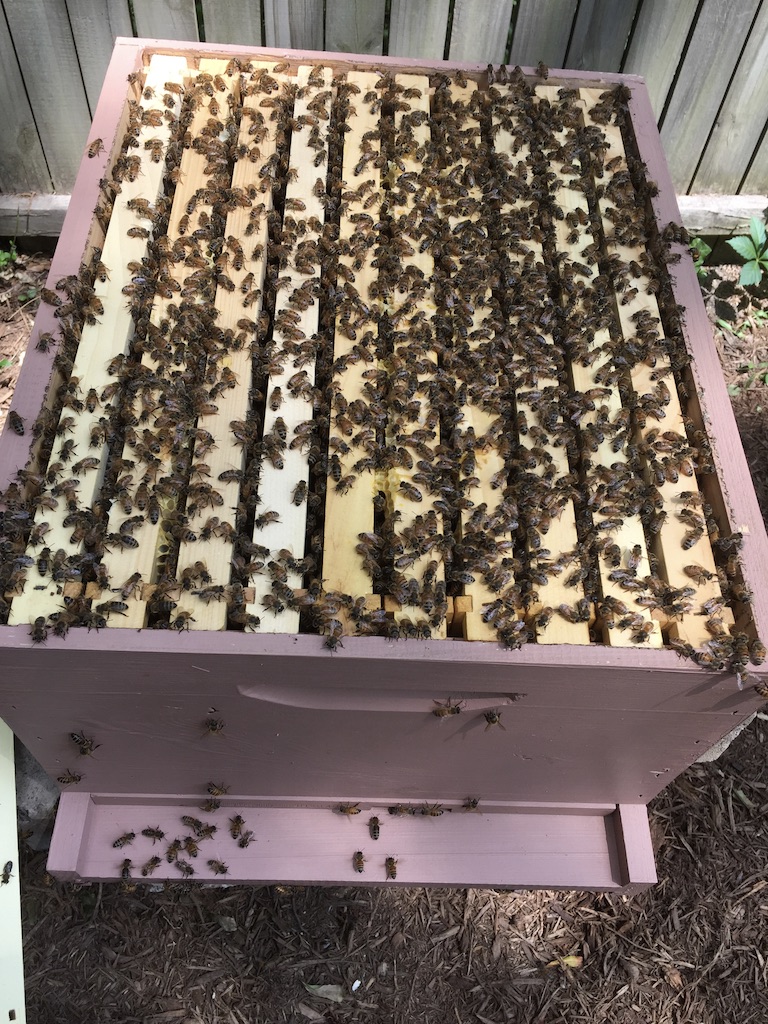
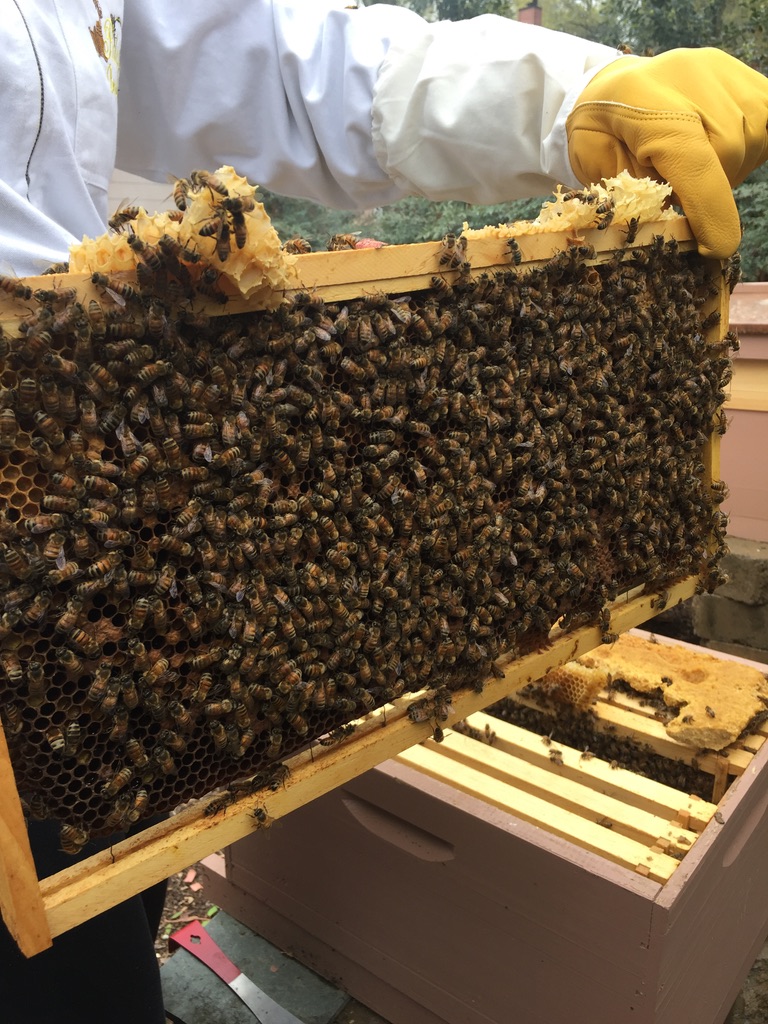
Back at home, in the cool mornings, the honeybees hunker down inside the hive.
I imagine them lying in rows of tiny military cots, packed snug, wing to wing. abdomens touching, as they twitch in cadence. They are getting ready.
Little stockpiled bundles of sucrose TNT.
I touch the side of the hive’s wood. It feels warm to my hand. Their circulation.
And later, in the afternoon, the Carolina sun hits the little hive full-on. And the gathering cone of bee bodies circles and dives and shoots off into space.
It’s breathtaking and weird.
They bumble and clump and make their way up the line, to the tiny slit of a door.
You go, no you go, after you, okay. Oops, I fell over. Doh. Move along, Oh, he’s dead.
It’s a bit scary – it’s loud, and kinda angry. They could absolutely swarm when they’re pissed. Memories of the Berenstain Bears.
They’re hard to track. Most appear identical. The word drone seems apt – agile, efficient and stealthy.
But then I see one that is slightly larger, and darker.
And one seems lost, dazed, it’s spinning on the ground. Dipping into the royal jelly? Pub crawl.
Of course, one lies dead.
My son told me there are undertaker bees, but which are those? Get one please.
Today the pollen is dark orange. Their back legs (and even front!) are furred with it.
The beauty in the funnel’s fury. The sober purpose in the chaos. The finely articulated flight patterns within the drunken revery.
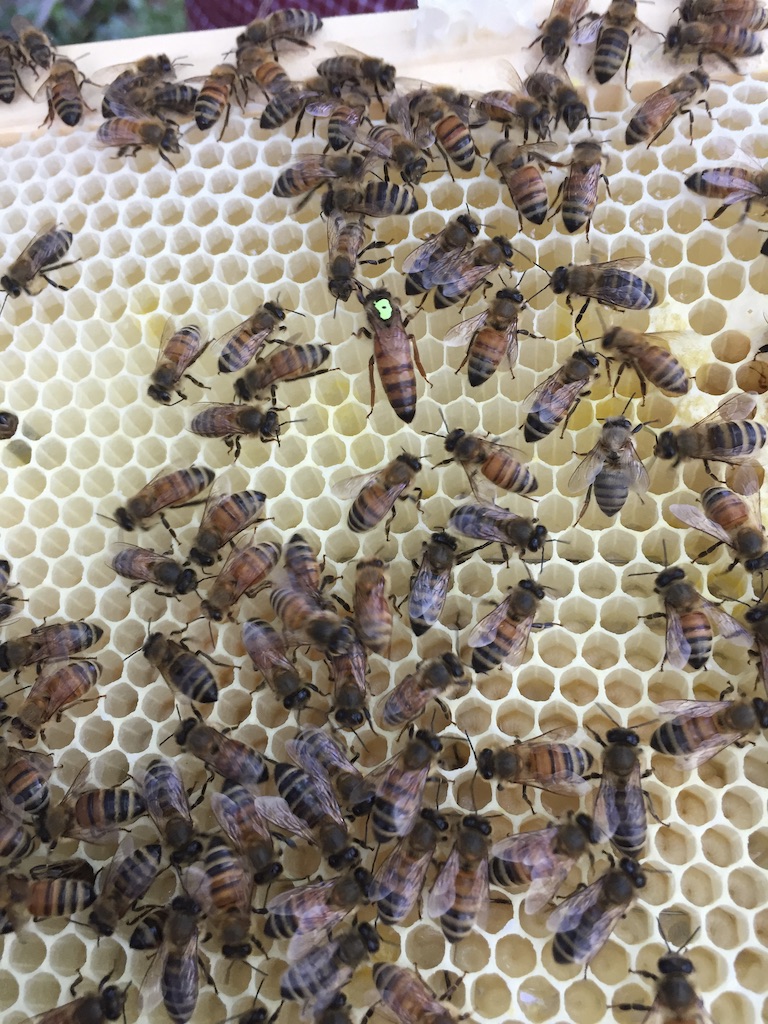
And I visualize our queen, she’s marked with neon green. Packed safe in the top tier (aren’t they always?)
I’ve only see her twice, because she can never leave.
She reclines, cloistered in the darkness of the frame.
With bodies crawling all over her. Uncomfortable, but coddled, well-fed, but tired, aging and what – wanting to escape?
But she has to stay. Imprisoned.
For the health of the entire hive.
For me. For the amber gathered on the rim of Summer.
If things go well. If we all stay well.
And now you, I imagine you,
Untouchable, but still we reach.
 honeybees & reveries