
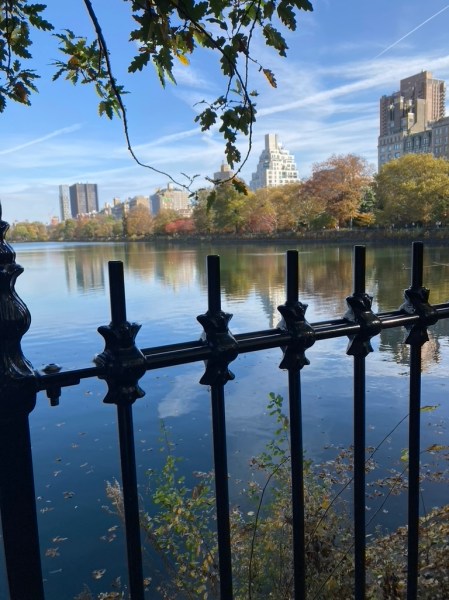
November and the month where nature is laid bare. The trees cast off garments of dry leaves and the earth’s bones are showing.
My chickens are into their hard molts, meaning that their feathers are coming off in huge tufts. Clumps of fluffy undergrowth blow up against the back door. Beneath their night-time perch lies thick piles of long pinfeathers in dusty, dejected piles.
Asleep in the darkness, they must fall from their shoulders and waft gently to the ground like snow.
All except for Juliette, who managed to change her wardrobe out last month – she alone is plump and shiny and ready to rumble. And she does – she’s the queen now. She moves among the flock with a regal air. Beauty is power and chickens know it.
To see a chicken molting at first you think it is in a final stage of death.
There is a ragged, beaten-up look to them – chickens lose at least half of their plumage, and what remains hangs by bits from their meat, looking ashy and grey.
Their listless combs are pale pink and they droop to one side with scant blood supply to pump them up.
They are pitiful, unable to assert themselves, off their game.
Vulnerability is death, of course.
And it is most startling to observe their faces (if they let you), especially around the eyes. The plucked white skin around them makes them appear elderly.
You swear they are not long for this life.
Reading about this situation, I learn that the feathers are actually bones, and that it is mighty painful when they are shed. And even more so when they are regrowing, which takes very little time considering.
I used to dread the molt – the few times a year when the girls look so unhealthy, and when they get picked on and the pink, tender skin gets brutally exposed down to their undercarriage.
Each chicken, on its own miserable cycle, would skulk around the edges of the feeder, hide in bushes, make do with the dregs – the picked over grains, the freshest sips of water.
But as with old age, you take a breath and look closer.
What first looks like frailty is just the glimpse of the architecture. A rare look at the pins that gird the bird. It’s the sturdy wire that makes the whole thing hold together. Even fly.
And so I look at November this way – with the stripping down of the birch bark, and the plucking and blowing of cones and spores. As a glimpse of the grit, the nut, the essence.
Nature always makes way for new growth – ready or not – but only with a ripping away of the summer’s wet green.
This only hurts like the old torn-off band-aid, I have to see it like that.
Death is here, always, in the seasons.
In our family, in my body.
When my dad dies, the pain will cross the seasons, the sting will never go away.
But when I talk to him every week on Face Time I can telescope his eyes.
And there is the same kind of tenaciousness I see in my hens. But with a humor and mental cleverness and a twinkle that is all Dad.
And I witness a brutal honesty that is strong, even supple, which, of course, has always been there to see.
But now it’s almost an expression that says, here we are, old body, it’s just a season like the others.
His clear blue eyes are remarkably the same, it’s just the feathering that is changing.
But whatever I observe, I know that it is best to take the time to look. To note the eyes, both my father’s and my flock’s.
So today in my yard, I assess the dry, flaking (repellent) poultry faces.
Catching them when they are low is a rare window. The hens are easier to grab, and to hold, and so I pretend that they need me more.
I stroke their breastbones full of the pebbly grain, and they startle and tremble, but remain composed in my warm clutches.
Believe it or not, I see them as proud creatures. And I treat them that way.
I think I am the one that sees sadness where there is actually hope.
 honeybees & reveries