daily scratch

In the morning, even before my cup of coffee, I palm the three tiny white pills and toss them back with a gulp of orange juice.

They’re like my chickens’ daily scratch feed – chock full of essential ingredients, but more than anything, for me, they are a dollop of hope. My antidepressants.

In a way, I see them as a power boost, it’s not that I’m sick, I am the furthest thing from it – I am healthy.

Yet my days without these micro-ingredients are unmanageable.

As the years have gone by, I have grown into the basic awareness that having a mental illness is not a weakness, it is a strength.

Of sorts, because it is not something a lot of people can see, or understand.

For me, it is who I am, wild, creative, emotional, sensitive – in touch, more of the real me.

And I know that my body is whole, even the days I feel messed up and broken.

Lately there is a lot of talk in the media about “fighting” COVID19 and being “strong” in the face of this illness.

This is wrong-headed thinking.

The metaphor of disease as an enemy or a weakness that can be conquered by positivity is magical thinking.

I do not believe that we have that kind of power. There is no mind over matter.

Having an illness is actually a part of being whole.

This is what I think.

We’re only here for a little while, and not because of anything we have done, necessarily, but because we are loved.

I feel the need to say this because it is sad that there are so many people fighting all kinds of illness out there, and they are being told to just have a positive attitude, rise up, fight the battle.

As if our bodies were battlegrounds.

As if things weren’t hard enough.

I know about those days where just getting up with the black heaviness pressing down on my body, is my own personal success.

And often even our best efforts will disappoint.

But it’s not because we haven’t tried hard enough, or been more positive, or we haven’t fought the good fight.

Some of us will get COVID19 and for no apparent reason, will die. While others, less healthy, will survive.

So anyway, with these sobering thoughts and coffee mug in hand, I walk out to spend time with the gals.

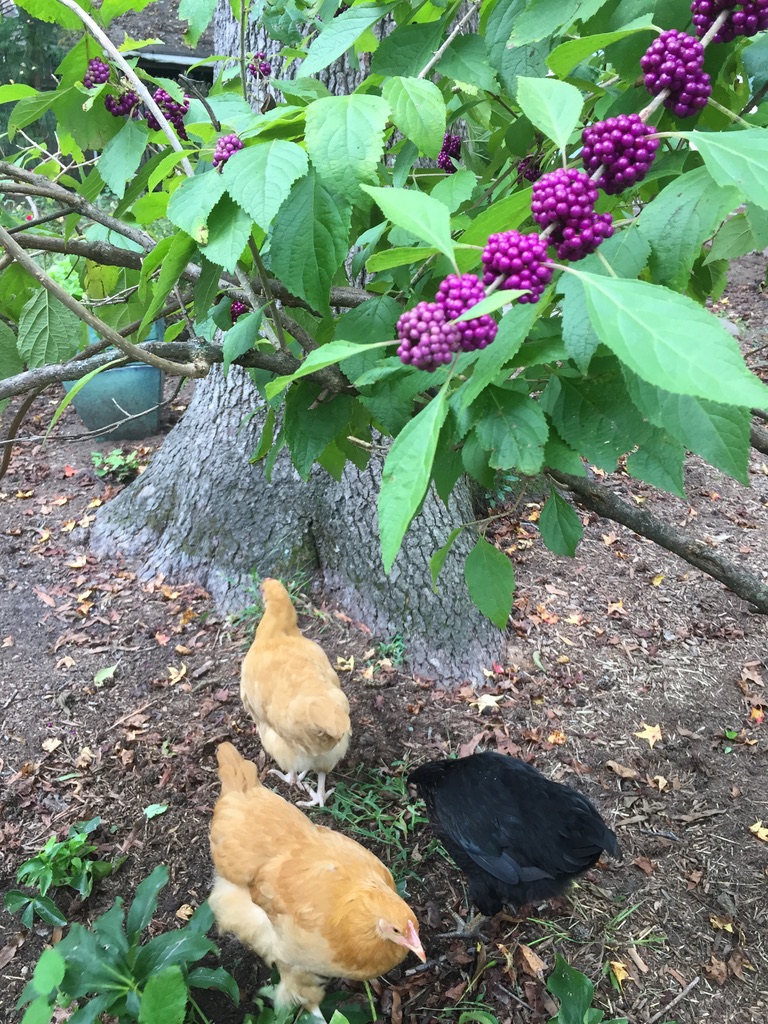
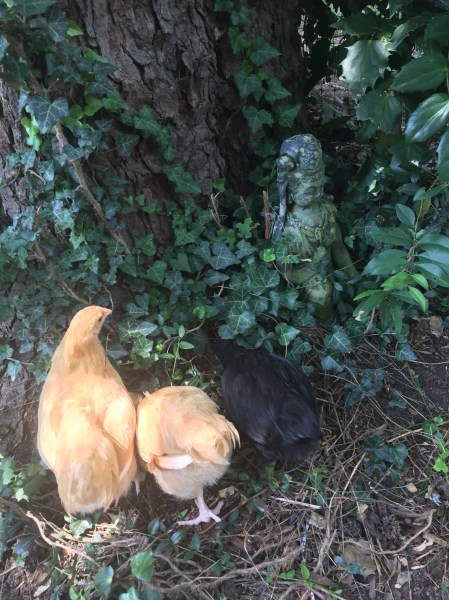
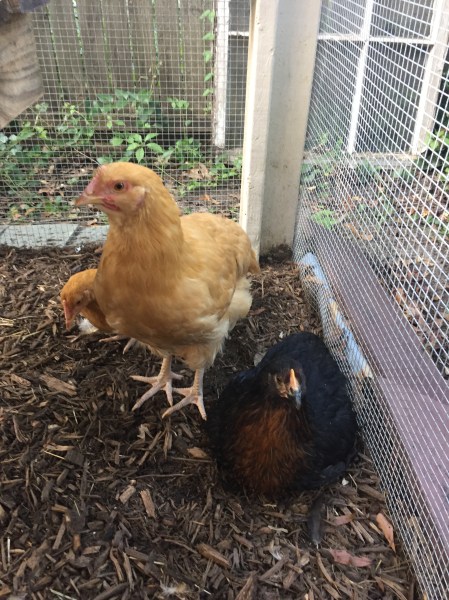
There is a light rain falling, and I see my three fluffy girls huddled underneath the coop. They manage to stand and stretch their scaly legs and bustle over to the feeder.

It will be a cloistered day for them, no free ranging in the yard.

I can’t say why exactly, but these silly birds distract me in the most meditative kind of way. Watching them, I feel close to these creatures who are not human-like at all, but are rather a link to a shared, ancient past.

And now, as domesticated critters, they depend on me for everything. And, like them, I too am a dependent creature: my warm home, my sustenance, yes, my drugs. These things I need. These things keep me here on this spinning planet, to greet another morning.

Another kaffeklatsch with my girls, time to cluck and play and to remember that we’re only here for a little while, and not because of how hard we have fought, or anything we have done, necessarily, but because, in some way, we are loved.

And we are whole.
distance loving

I want to love my chickens, I really do. They are so funny and sweet. But they are so very shy and stand-offish.

They tease me with their little pecks at my shoelaces, and occasionally one will jump onto my lap for a brief spell. But soon they scoot off and scuttle away from my hands.

I simply want to hold them to my chest and win them over with my maternal instincts.

But by and large, they are not cuddlesome. They don’t want to snuggle.

When I reach for them they huff and SQUAWK and run away.

And so I must observe them quietly, appreciate them from a distance. Like the soccer mom I used to be, I must hold back, and not rush in to hug my son after the game.

Lately, I think loving my chickens is a bit like loving my grown up children.

They have both left the nest, independent adults now – out from under my wing and away from my beady little eye.

we relish the sweetness, savor the transitory

Mothering has always been a story of letting go. Even back then when they were small, I understood that there was a shelf life on those childhood snuggles. I always knew the time for wide-open intimacy was finite.

So for now I leave my lap empty, but ready, my arms open for hugs. Waiting for a smile, an embrace, a big kiss if I’m lucky. A visit in the backyard with my son, a Face Time with my daughter. They are thin substitutes, but I’ll take them.

I think it’s just life for all of us these days.

We monitor the distance between our bodies, and try to make up the difference in our hearts – we squeeze a little tighter, hold on a beat longer. We relish the sweetness, savor the transitory.

And we imagine the fullness of a love that transcends the body – is that possible?

A place where memory and imagination must fill in the blanks.

And I wonder: How much of love is in the intention rather than the actuality?

offering

I bend down and kneel in the garden’s damp mulch, and take a closer look.

Partially hidden beneath the leaves is a fully formed bird, a beautiful wood thrush.

Its creamy breast is thrust upward as it rests on its back in the undergrowth, with its head buried beneath.

The plump belly is dabbed with brushstrokes of soft black, so vivid against the white.

Its tiny feet are rigid wires, curled as if wrapped around a perch.

The eyes are tiny, dried peppercorns.

Perfectly intact, no puncture wounds, no blood.

Just dead.

After grabbing my gloves, I lift its weightless body and take it across the lawn to bury underneath the shade of the cedar tree.

Theo trots over quickly, wanting to paw the dirt, curious, intent. I hold the little bird up to his nose and tell him not to mess with it. I wait to let the lesson sink in.

After a bit, I cut a rose from the rugosa bush and lay it across a rock that covers the loose dirt over the tiny grave.

Crouching in the morning cool, a moment, a peaceful prelude.

Death, unexpected.

Some days, the lawn feels like a prayer rug, rolled out for me, requiring my bare feet, my steady attention, my silence.

the lawn feels like a prayer rug, rolled out for me

A bow to the humility of not knowing anything really, about Nature, about bird species or bird calls, or migration patterns.

But today, a tiny wood thrush’s broken bones, with its soft breast pointed skyward, it feels like an offering.

I am witness, a kindred animal.

A simple garden task, to remove the detritus from the yard.

But still, the reality resonates, the little bird and me. We share this garden, these hopes for a little life, this small time on Earth.

I roll up my sleeves and tuck my hair behind my ear. It’s just a bird, I think.

I’m just a single animal organism myself, I think.

The grass flattens as I walk across it towards the house. My mind sifts through the material. What makes me think that I could ever be separate from this bird life, this animal, this beautiful creature so ingeniously created with such care?

It blows my mind that I am a piece of all of this, but that I habitually forget that fact, and that forgetting comes at a cost.

The loss of this small moment of connection.

My feet bare, my mind clear, my heart open.

I am a bird.

chicken dreams

I am 10 years old. I sit at my small wooden desk that nestles under my bedroom window.

It is chunky, but solidly built, a bright lemon yellow color. My mother painted it for me.

Two drawers that pull out smoothly and one at the bottom that is deep. That’s where my really secret stuff will go.

There is a matching wooden chair that fits my bottom perfectly and nests underneath the lip of the long top drawer at my chest level.

The creamy finish is smooth – that cheery, shiny yellow motif of the smiley-face 1970s, and my mommy got it just right. It matches my smiley-face bank and the smiley-face patch sewed on the back pocket of my favorite jeans.

I love the desk to be neat, with pens and pencils lined up in the drawer and lined notebook paper tucked inside it, along with my Holly Hobby diary.

And even a box of wax seals, lined up like sticky gummy candies. They wait for my note with a fancy handle with a stamp that makes a smiley-face design.

I rest my elbows on the sturdy wooden top and stare out the window.

My babysitter Sarah lives next door and her bedroom window desk also looks directly at mine.

Sometimes at night I wait until dark, when I can see her light come on. Her room is wrapped in a gauze of purple, I can just make out her slim body moving around her room.

I want her to stop and sit down and look over at me. She is so beautiful.

I love writing letters more than anything. I write my mom and my dad and my grandparents. I leave notes everywhere – on pillows, under doors.

When I sit at the bright yellow desk there is order and completeness and clean possibility. Optimism. Even greatness!

I am yellow, like joy, like a daffodil. I want my words to fly like the pollen that is deep inside the blossom, just waiting for a breeze to whisk them into the sky. Just like that – easy – I want my words to make me a famous author.

I want my words to fly like pollen …

So I wrote that memory a long time ago, and unearthed it from boxes in the attic in a recent pandemic cleaning frenzy.

What stands out so brightly to me now is not the desk. It is this: my mother.

My mother gifting me the perfect thing, the desk. She saw how I loved to spy on people and scribble in my journal and pretend to be a journalist.

I don’t have many memories of my mom slowing down to sit with me, to just be, to simply listen. She was an ADD type and I learned early on that her focus was generally elsewhere.

But it is only now that I can fully appreciate that Mom really did see me, in her way. She saw the yellow in me.

And maybe it’s not too late to savor the tiny grain, the intention. I think of the yellow desk and how she did love me.

How much of our childhood is essentially a grasp for attention. It’s as profound, yet as simple as that. We aren’t grabbing for a thing, a gift, or any object at all. It’s a craving to be the center of the gaze.

We long for someone to look us full-on in our little faces, to stop the grown-up world for just a moment, because nothing eclipses this love.

Listen to me. I am important, I have something to say.

It sounds tiny, but when you experience it, you know it. Time slows down. There is a texture.

It is the thing that you will remember. Like the wax to the seal, the moment imprints on your heart.

This is what I mean about moments. My chicken moments.

Looking deeply at a thing. Listening, absorbing the gaze, or gazing deeply at someone else.

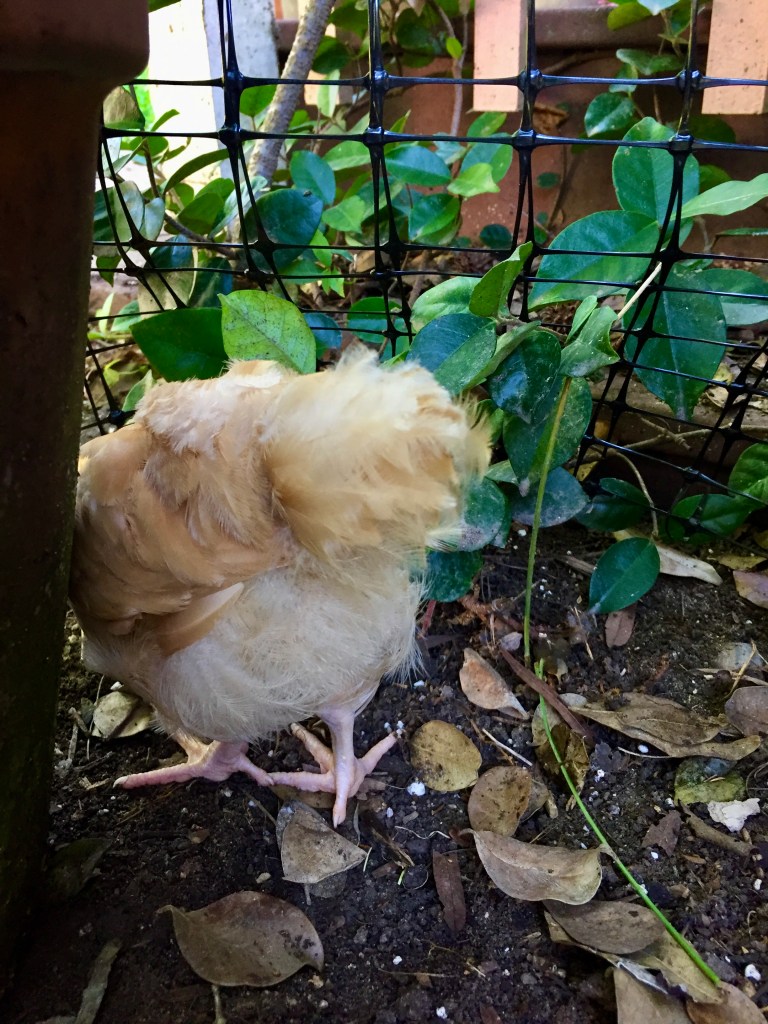
Anyway, this morning I watch the buttery yellow pullets make a run for the yard after the nighttime roost in the coop. I love their happy clucks and chortles of surprise, like its a brand new world out here.

They seem to forget that they know this place – and what happened yesterday. I wonder if they have a memory.

I wonder if they dream?

Maybe they dream of a long ago forest, and of an ancient time when they were free to hunt and scurry and lay eggs. When they would plump down underneath mother’s thick breast into soft grasses, when darkness covered the deep thickets at dusk. When they were vulnerable but still safe from predators.

I wonder if they dream of what it felt like to be wild.

Wild thoughts, memories, chicken dreams.

scratch

In the mornings I splash milk into my coffee mug and walk, barefoot, across the stone path to the chicken coop.

I sit on an upended clay pot (my throne) and watch as the young pullets kick and scratch and poke their beaks into the same old dirt.

For months I’ve found myself doing the same, going over and over tired ground.

Since the pandemic, I’m like my chickens. Stuck inside, I find myself sifting through over-picked brain material, my thoughts ruminating, enclosed in a singular pen, my own cramped hen house.

Last night the rain brought a deep drench to the run. A leafy chicken mulch smorgasbord. The water brought new material to the surface for the girls to mull over. A bright grain of corn, the squiggle of a green worm, the measured drink of brown water.

It blows my mind how content they are to retread the same small patch over and over. They see the miniscule changes to the earth, fresh bugs, mildewed straw, whatever gets churned up. A cicada!

I love that these fluffy dunderheads are so simply satisfied and able to keep a gimlet eye on the moment.

It’s nothing truly new, or interesting even, it’s just a focused gaze.

But the single grain is nourishment, a kernel of sustenance. A cluck, a breath, a hustle into the morning sunshine.

It’s like my writing. There’s this inward and outward vista, always a choice, always available.

There are days I can go so deep in memory and reflection, one nibble of detritus at a time. Other days I’d prefer the nesting box, a nap, a forgetting.

But chickens remind you of survival, they’re little dinosaurs. And I share this too – the inherited instinct to keep scratching, to keep hunting and pecking. I’m built to cluck and fuss and find my little strut.

My sister says chickens are stupid – “bird-brains” – after all, and in a way she’s right. But they’re prehistoric, built to survive, which is more than I can say about our species at the moment.

Anyway, it’s not Man against Nature out here today, but it’s what I do. I write. I pick at the neglected patches of dusty yard, weedy and dry.

I tell myself, this chicken yard has just enough wildness and disorder to make stuff grow, even chickens.

gargoyle

A stiff wind cuts across the cold stone squares as I run through the university campus.

Normally there would be hundreds of students here, camped in tiny tents, waiting to buy basketball tournament tickets. An annual rite of March.

Today it’s a ghost town.

The steps of the student union are empty, too – no students chatting while cradling their steaming hot lattes.

Simple cups of comfort.

Not long ago, they were crowding and bumping into one another along these paths.

Doing life the way young people in college do.

Or how they did.

And finally, I look up at the church.

It rises majestically from the bottom of a long hill, a beacon visible from many miles away, the Duke Chapel.

Oversized for this little tobacco town, it looms like an ancient European cathedral.

And today I remember Paris and Notre Dame. That magnificent icon of hubris that we cherish and clutch tight to our collective memory.

As a tourist, I never stood in line to buy tickets to go inside the main structure, I always sat on the grass in the playground in the back courtyard.

The perfect spot to get a closer look at the gargoyles.

Each figure, so remarkably detailed and unique – whimsical, weird, monstrous. agonized, laughing, snarling.

Quirky little ogres.

I remember reading about their history – how they are variations on Medieval dragons, and they were crafted to serve several functions.

One was structural – to drain water away from the main roofline of the building.

Another was to serve as a meme to church members of the Devil that lurked in the city – ready to pounce and drag them down to Hell.

Another was to act as guardians of the purity inside of the church itself, they repelled the evil forces of the secular world.

Yet the mighty Notre Dame lost its cloak of invincibility in a dramatic spectacle last year. The entire world watched in disbelief as the spire went up in a blaze of bright orange flame.

Sparks, like anger, fizzing and igniting.

Boiling, roiling, incinerating.

On and on, through the night, gobbling up oxygen as tiles fell away in fiery chunks. And finally portions of the roof collapsed into the belly of its own sanctuary.

Later, ruined, ravaged, wet remnants and grief.

How quickly the facade of normality can crumble, how our devout icons can be razed.

… how quickly the facade of normality can crumble.

Beauty and grace buckling at the knees.

Where once we found comfort and refuge, now we doubt.

Some nights, I wake in bed at 3 am, heart beating too fast, not sure if the fear in my chest is in the dream or in the waking.

For me, I wonder where we went so wrong, my generation. How we ruined things for our kids. How I could ever go back and undo, take better care.

I still want to believe that, like the little gargoyle, yes, we are tragic and grotesque, but we grapple with our other masks, too – charity and goodness, bravery and compassion.

For me, I just want to run and run and keep on running, to that safe place inside that has always been my refuge: my hard-won stability, my humor, stillness, my best self.

But today, even though the streets are quiet, the volume is turned up way too high in my brain.

There’s a jarring dissonance between outside and inside the body – the harsh clanging of the inane cathedral bells amplifies the disorder.

Good and evil, faith and fear.

And I can’t go in, but I know that the Duke Gardens is a fantasia today – vacant, but mobbed with drunken bees, rare specimens of botanicals and aching new life.

Beauty, ruins, remains.

Running, running, running home, no quietude, no answers, just noise.

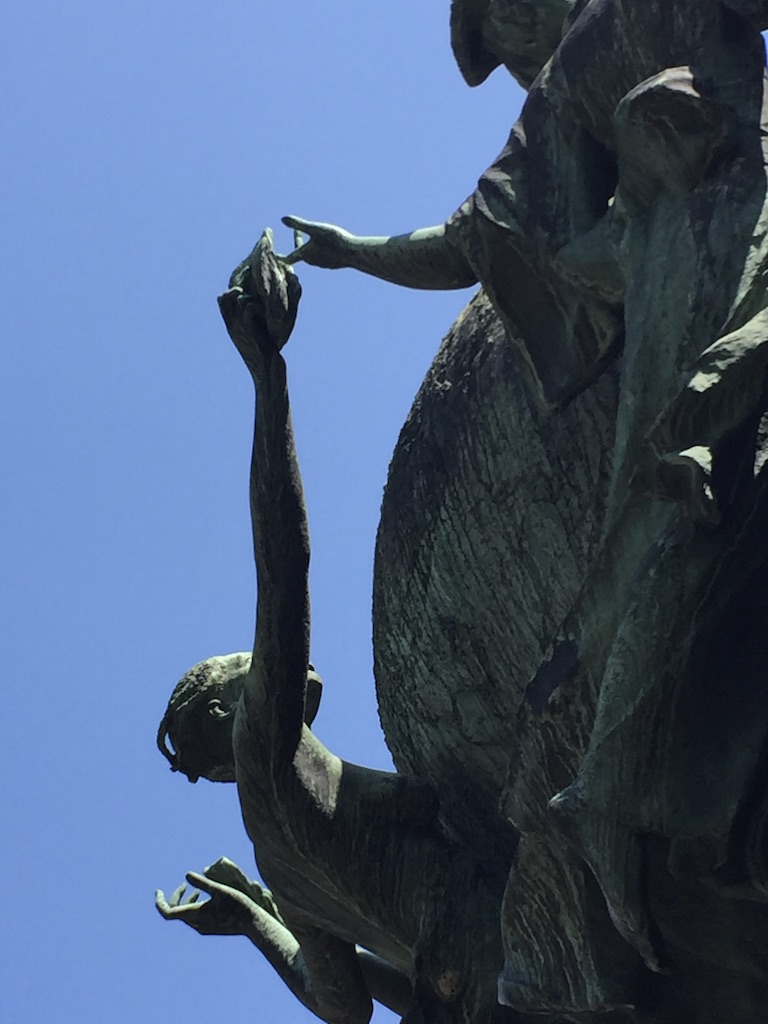
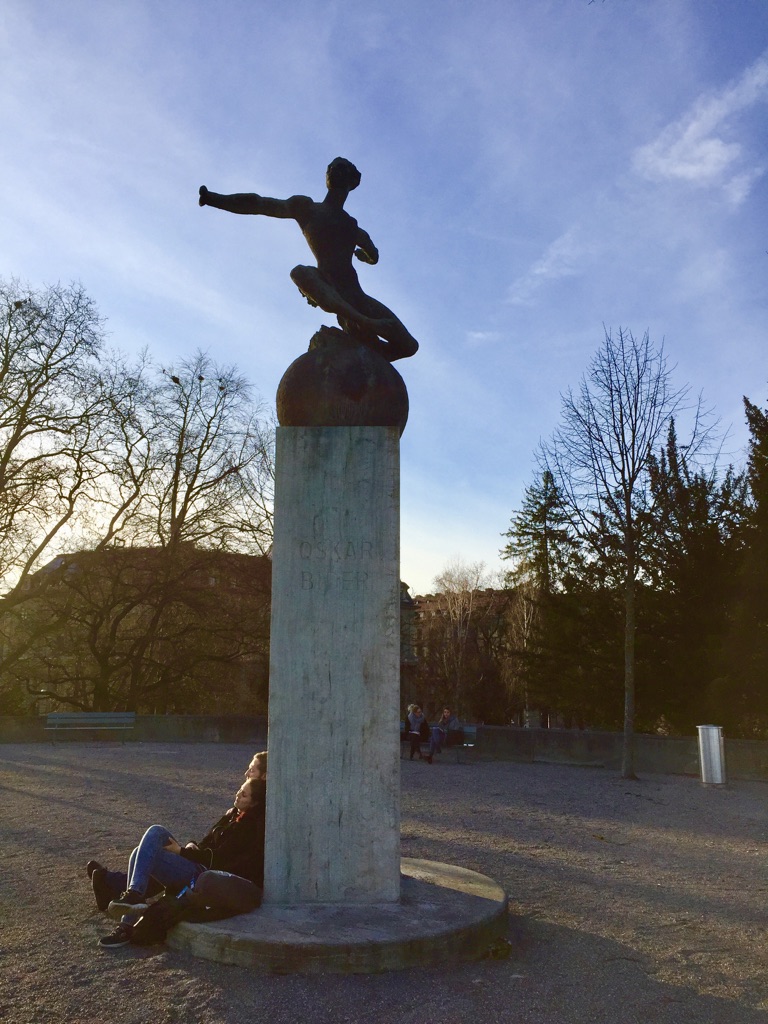
  • Photos:
  • Marseilles, France
  • Strasbourg, France
  • Bern, Switzerland

pre-existing

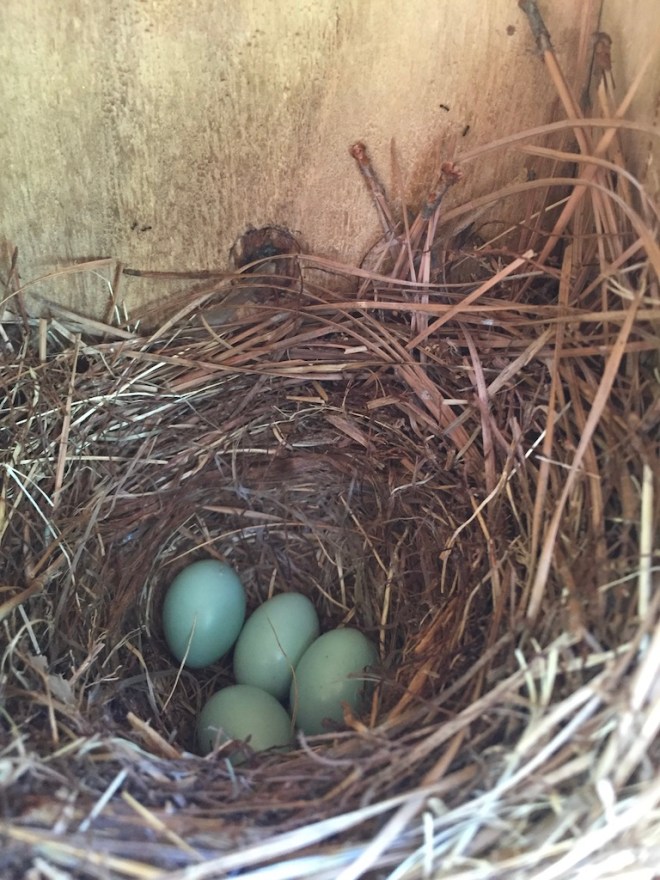
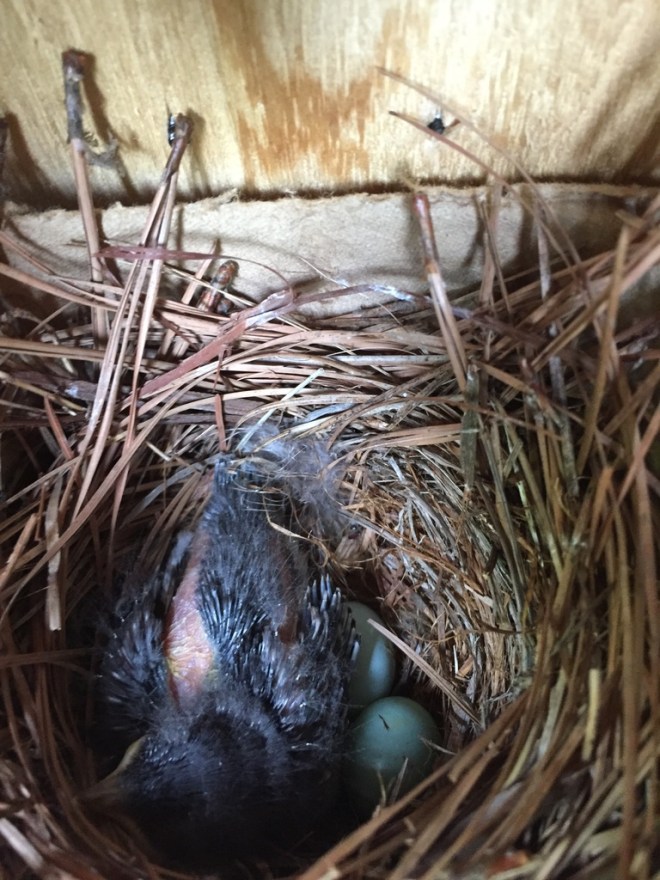
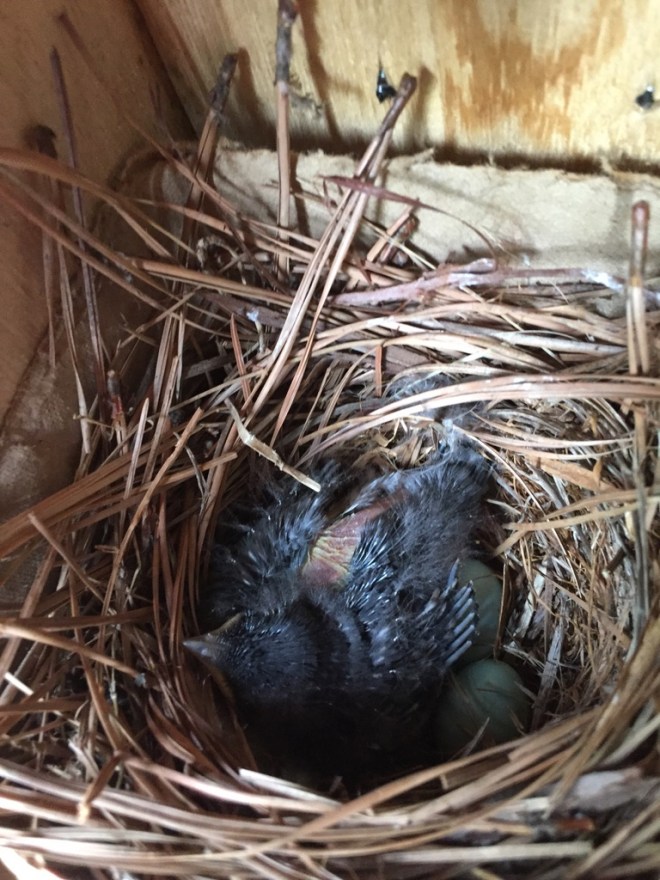
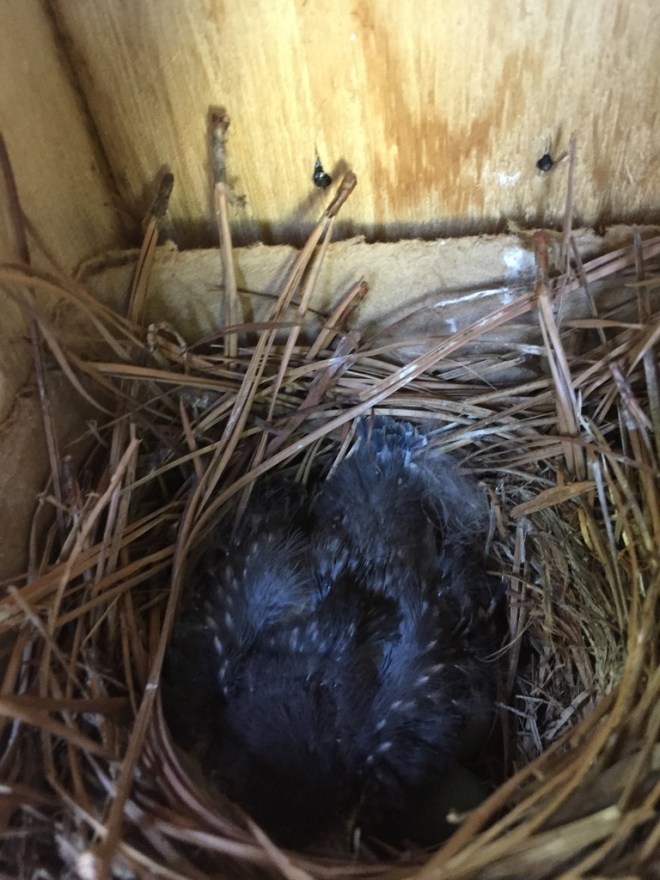
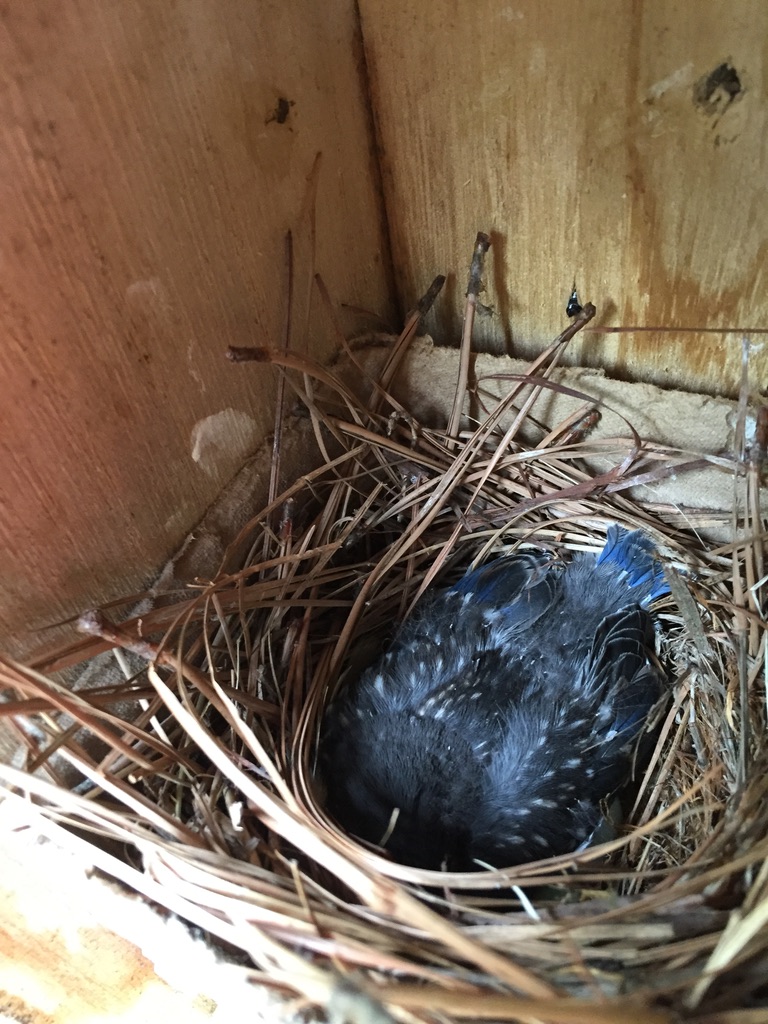
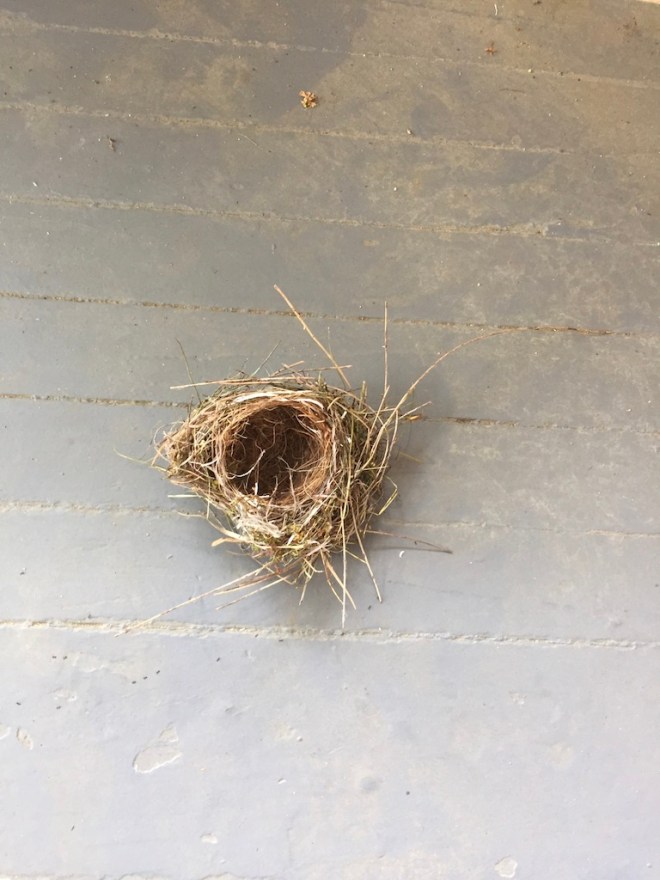
This morning I walk out to the backyard for my daily check on the Eastern blue bird box.

Each year I clean it out and hope and pray that this will be the year that eggs will come.

And chicks will emerge. And fledglings will quietly grow their brilliant cerulean plumage.

And each will poke a head out and take a first look at the new world, and they will be convinced that it is a safe one.

First they’re naked and blind. Then they become beady eyes from underneath mother’s downy breast.

And then they are able to peek through the tiny door.

After several weeks they will take that courageous first flap. Usually a tumble onto the ground, and a flurried frenzy.

But then, coaxed on by mom and dad, they can alight on the clothesline or a nearby shrub.

And from then on, I don’t know, but it makes me anxious.

I see a story that could go either way.

Two options: life or death.

Survival or submission.

Fact is, there were 6 perfect eggs, and only this one goober made it.

I was sure the others were just late bloomers, but no, they were dead.

Dead as dodos – dummies, diseased, unfertilized, unviable, impotent, inept, gross, losers, whatever.

This is the one success story. For now. This one homely dude.

A few more days, and the rent comes due, and it’s time to catch a flight out of here. I’ll probably miss it, it’s quick as a blink.

Proud, shrieking parents, the teenager darting for open space. Orchestrated, pell-mell drama.

Or not.

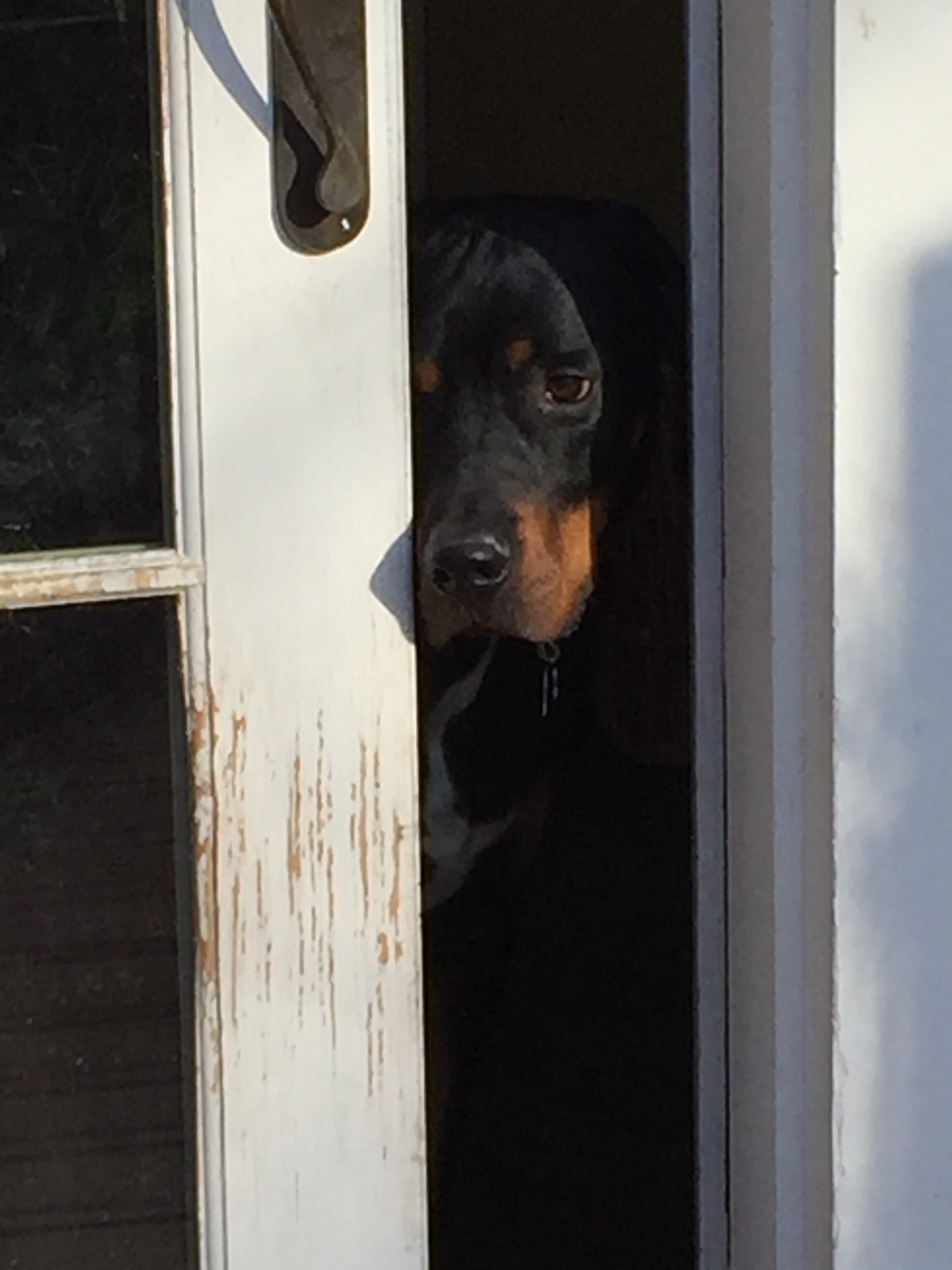
I might see my dog trot back from the bush with feathery turquoise jowls.

There have been many obstacles: fights with other birds for the nesting box. Bluebirds are shy and don’t stand up for themselves too well, they get bullied.

The specificity of the nesting materials – what the birds can find.

The availability of mealworms. And the weather.

There are cats, and hawks, and squirrels. All of them poach on the nest. Poached eggs.

It’s so easy to be romanced by the smooth, cyan eggs – the sweet potential, the perfection of design. So delicate and exquisite, but packed dense with balled-up chick.

Fact is, the gnarly little dinosaurs have stubbornly survived because of their horned beaks and their obstinate refusal to go extinct.

Evolving over millions of years, they are pre-history, Pre-human history, that is.

They are strappy, scrappy: their beaks scratch, scrape, puncture, poke, peck, peck, peck, again and again, shivs against their incubus prison.

They puff, fluff, fluster, muster, tussle, ruffle, muffle and kerfuffle.

They strain, pop, quake, shake, step, hop, hop hop again, and jump off.

And then?

Lately I’ve been thinking about the term pre-existing conditions.

One of mine is bipolar 2. It’s in my little DNA coil, genetically determined and individually crafted for me.

Beth genes waiting for expression.

At times I think I see patterns in my symptoms, but often they are completely random.

It is this fickle randomness of my own body that makes me think that life has never been a story I could control.

Our bodies, so miraculously designed and constructed, are also scattershot and absurdly random.

But we share one inevitable pre-existing condition: the fact of our mortality.

Death.

We know how our stories end, but still we fly.

We grope for the sunshine through the ragged peephole, and spy the blue, and we go for it.

We fumble, tumble and lurch.

Ideas waiting for expression. Compression, repression, impression.

A high probability scenario: soft wings torn away from tiny sanguine breast, a heartbeat skittering to a stop, a few rufous feathers left as tokens in the grass (the loss of lapis, my hope, my heartache). An ending.

Anyway, afterwards, I’ll clean out the box again, remove the old nest and dispose of the dead eggs, preserved perfection, stillness.

And eggy bits, sticky with fluff and excrement.

And emptiness.

And I imagine wings of purest indigo.

And flight.


we all know how the story ends,

but still we jump.

I see you

I’m still trying to go out to run every day.

But it’s not the same.

It takes longer to clear my mind, relax my muscles and get into a flow. I just want to breathe deep.

I’m hardly releasing any endorphins – they’re depleted – along with the good snacks, peanut butter, and The New Yorker.

Running now has a laser focus. I must avoid other bodies.

It’s a strategic maneuvering to stay away from everyone.

Every one.

Kinda like a military exercise, twitchy and tense and adrenaline-fueled.

Or like a crazed interpretative dance, with hip-swivels, and sidestepping, and even complete “turn-around and go back” moves.

But if it’s a dance, it is one choreographed to the metronome of fear.

click, click, click. click

A Swiss clock.

A lock step.

A bomb.

These days we all want to get out – to be with friends and family.

To touch.

We know we are lucky, but activity feels so tightly censored.

Wariness.

Introspective extroverting.

Caution.

Today, a father lazily cycles in loopy circles in the middle of our street, with two young daughters trailing.

They shriek, and I notice the new chrome shine of their bikes.

Dad corrals them away from me, and they toggle off, with the neon handlebar streamers breezing in their wake,

There’s the grey-haired man with his elderly German Shepherd. He generously pulls the leash tight to his side, his eyes crinkling in a smile above his mask.

I see some neighbors taking their daily jaunt, I haven’t really talked to them in years. When did Kay go completely grey?

I pass a tall, beautiful Duke student, She has golden legs and her blonde ponytail bops cheerfully.

She moves over to make a wide circle, darting out into the road, gracefully.

Why is she happy? Why is she still on campus?

I love her pink tie-dyed headband. I want one.

I see a young couple. The man is wearing huge headphones, and he dances in broad, lunging, hip-hop type steps.

Knees wide, head dipping, his arms swoop like a crane taking flight. He circles her as she walks. And she smiles.

And I smile too.

I have seen all these people before.

And I have never seen these people before.

But the waves, the nods, the gestures, the smiles – they help fill in what has been scratched away.

They put flesh on the leanness of seclusion, they buffer the coldness of screens, and the dirge of media news.

They help me forget about the black scrim of our world’s despair.

At least for an hour.

I comply, making space, simply watching.

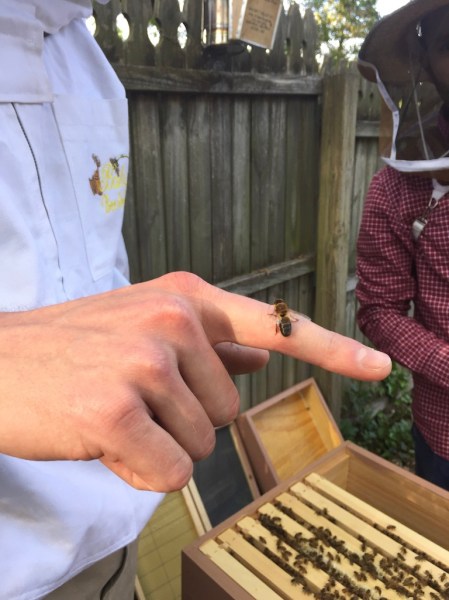
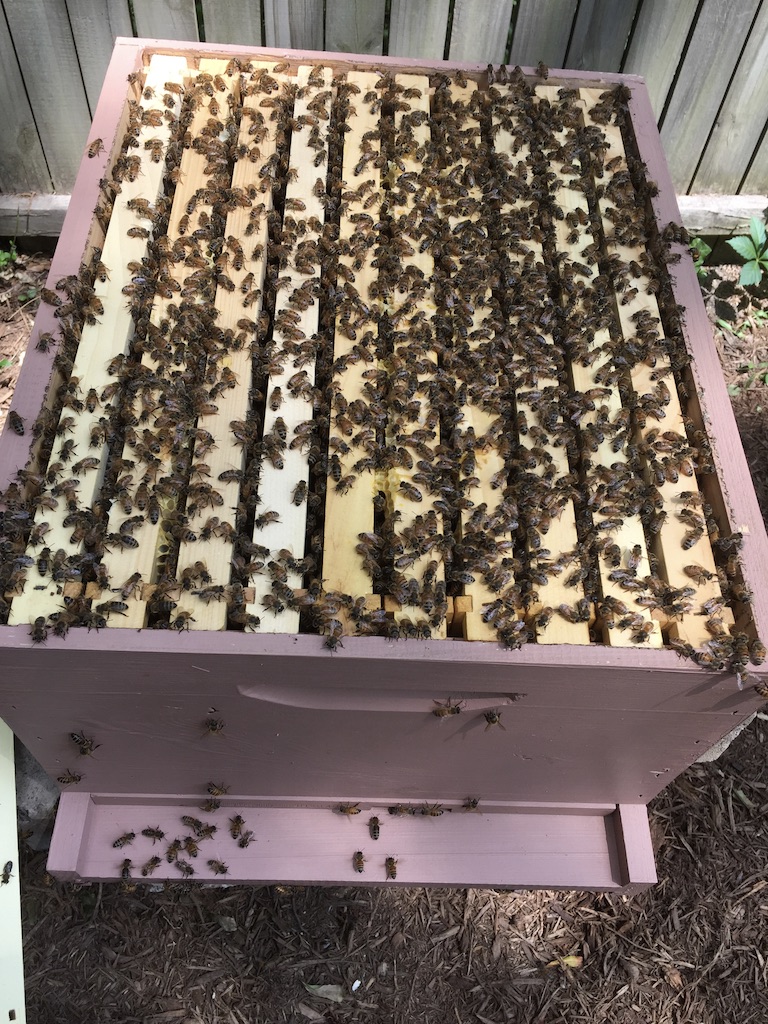
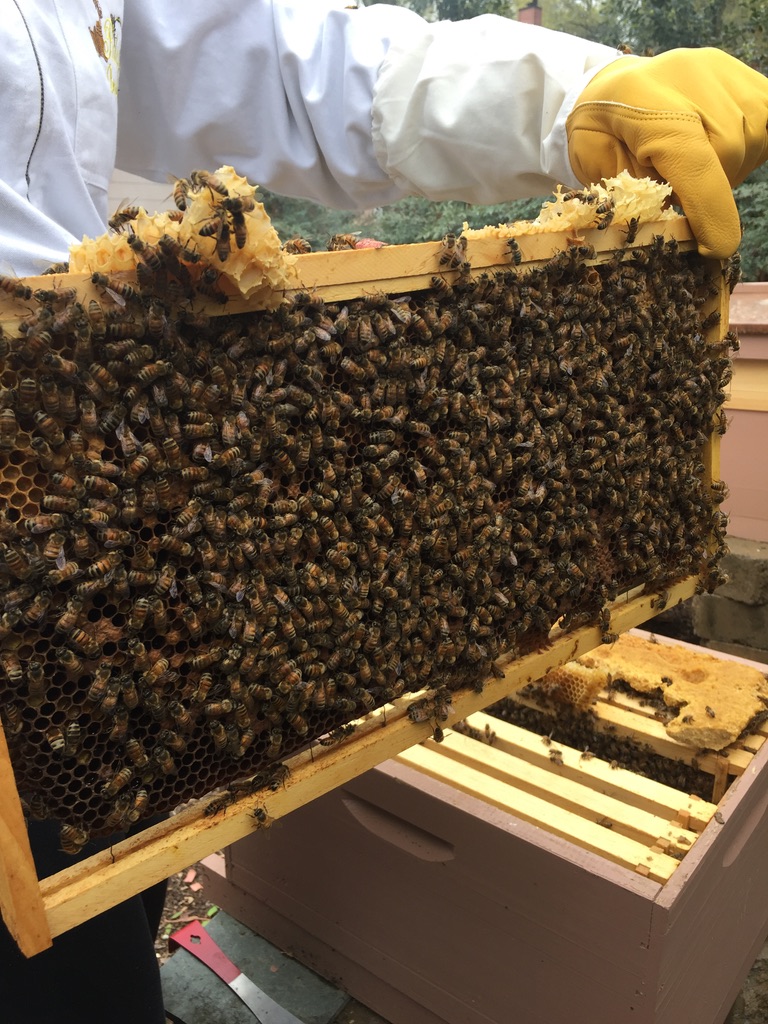
Back at home, in the cool mornings, the honeybees hunker down inside the hive.

I imagine them lying in rows of tiny military cots, packed snug, wing to wing. abdomens touching, as they twitch in cadence. They are getting ready.

Little stockpiled bundles of sucrose TNT.

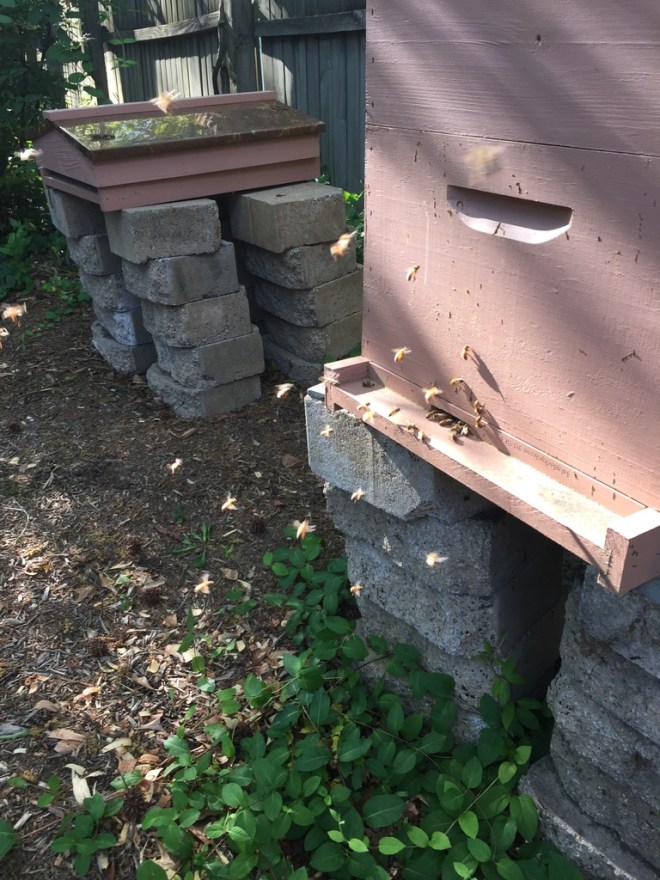
I touch the side of the hive’s wood. It feels warm to my hand. Their circulation.

And later, in the afternoon, the Carolina sun hits the little hive full-on. And the gathering cone of bee bodies circles and dives and shoots off into space.

It’s breathtaking and weird.

They bumble and clump and make their way up the line, to the tiny slit of a door.

You go, no you go, after you, okay. Oops, I fell over. Doh. Move along, Oh, he’s dead.

It’s a bit scary – it’s loud, and kinda angry. They could absolutely swarm when they’re pissed. Memories of the Berenstain Bears.

They’re hard to track. Most appear identical. The word drone seems apt – agile, efficient and stealthy.

But then I see one that is slightly larger, and darker.

And one seems lost, dazed, it’s spinning on the ground. Dipping into the royal jelly? Pub crawl.

Of course, one lies dead.

My son told me there are undertaker bees, but which are those? Get one please.

Today the pollen is dark orange. Their back legs (and even front!) are furred with it.

The beauty in the funnel’s fury. The sober purpose in the chaos. The finely articulated flight patterns within the drunken revery.

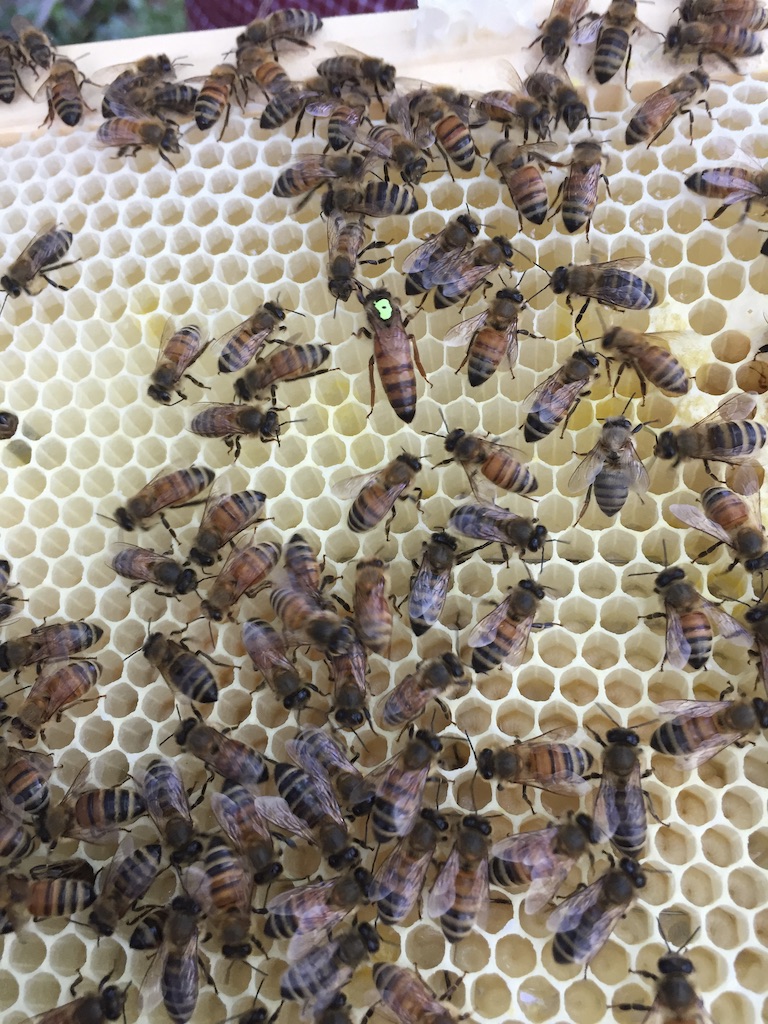
And I visualize our queen, she’s marked with neon green. Packed safe in the top tier (aren’t they always?)

I’ve only see her twice, because she can never leave.

She reclines, cloistered in the darkness of the frame.

With bodies crawling all over her. Uncomfortable, but coddled, well-fed, but tired, aging and what – wanting to escape?

But she has to stay. Imprisoned.

For the health of the entire hive.

For me. For the amber gathered on the rim of Summer.

If things go well. If we all stay well.

And now you, I imagine you, 

Untouchable, but still we reach.


conch


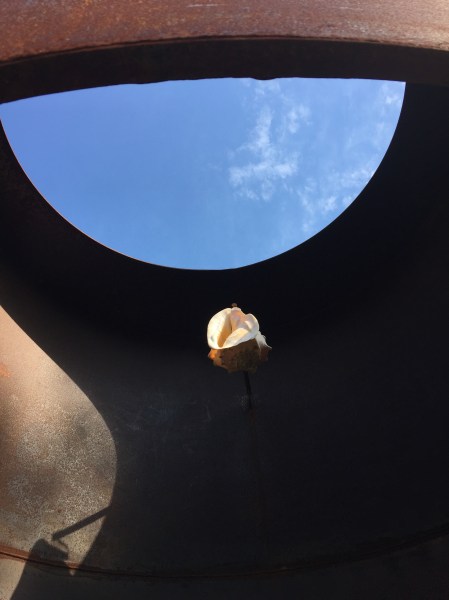
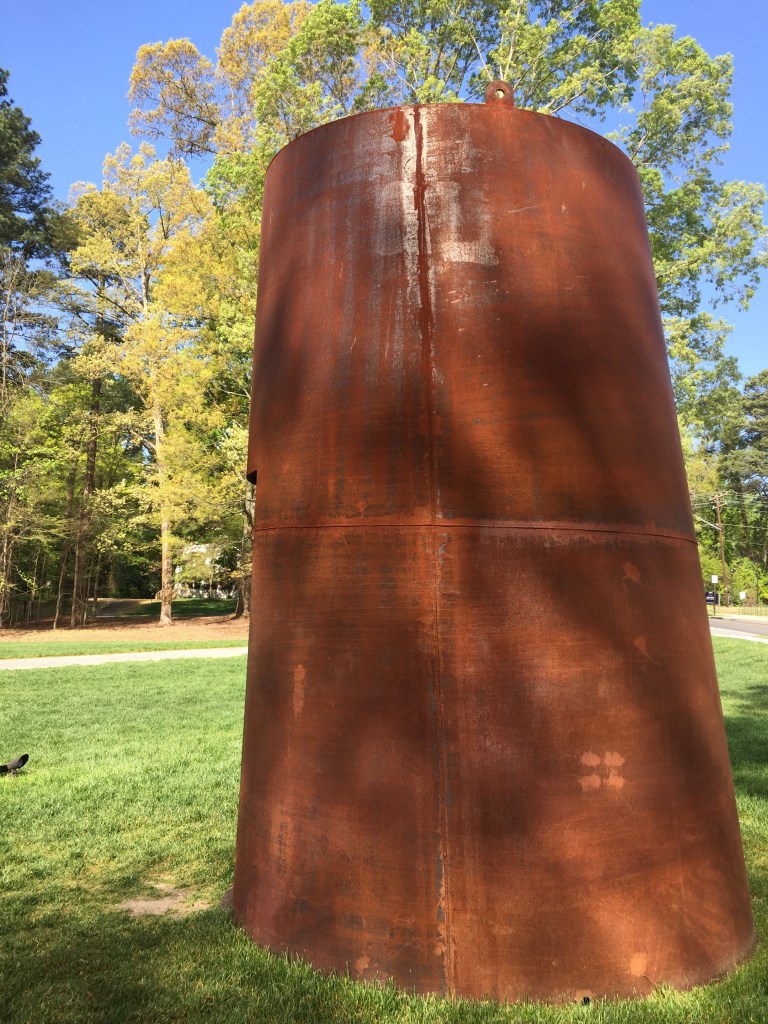
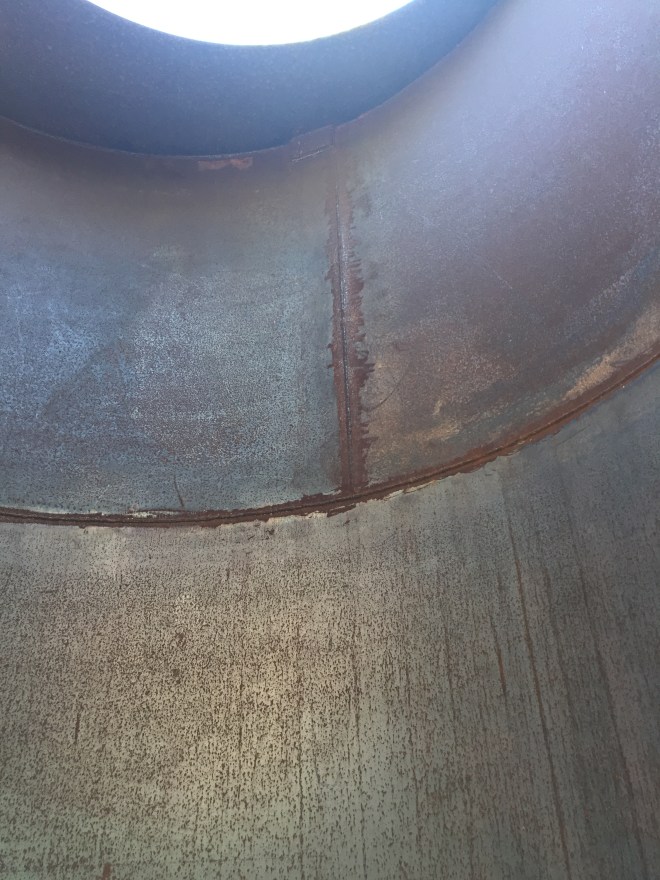
I sit with my legs crossed at the bottom of the rusted steel drum. When I thrust my leg out, my foot bangs against the side. It makes a deep, reverberating boom that thrums up my tailbone and into my chest.

I am small, cramped inside an echoing chamber of scratched-up metal that digs against my shoulders.

Music plays from tiny holes in the drum, a lilting scrap of surf and gulls, then a deep, mournful cello.

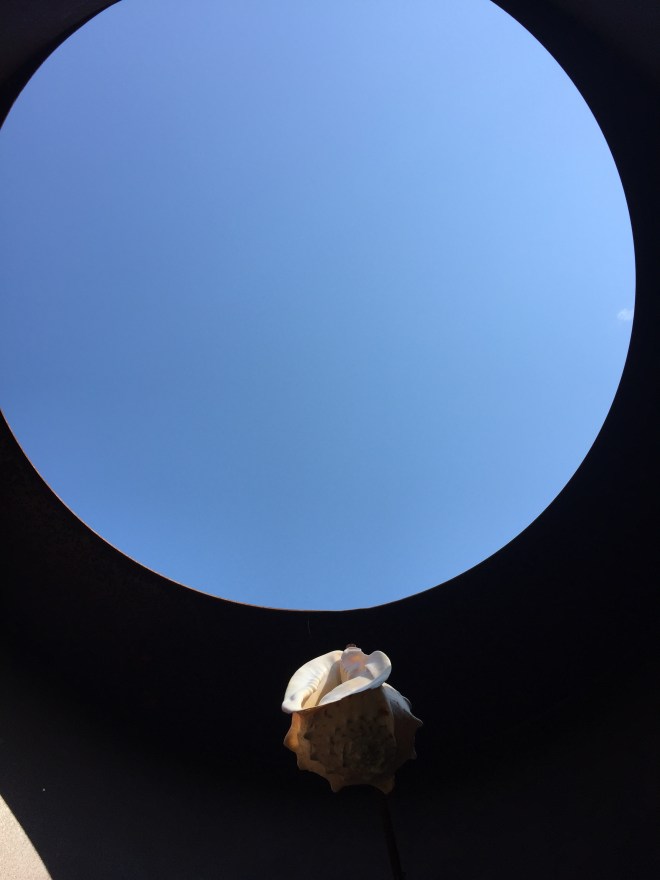
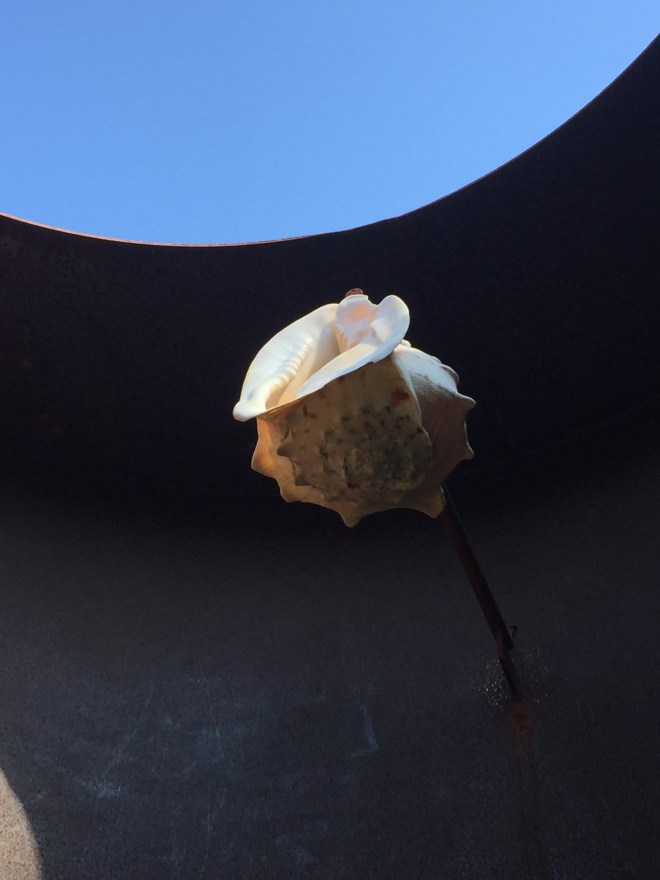
A conch shell is suspended in the space high above my head, I imagine holding it to the curl of my ear and hearing the music.

And then the cello gets louder and amplifies inside the vessel. My private moment that should stay mine, alone, ricochets uncomfortably.

The sculpture is Radcliffe Bailey’s “Vessel”, a representation of a slave ship from the 1700s on a crossing to America. It imagines what an African slave might have experienced in the depths beneath board, lying down flat, chained, one to another, in the bottom of the hold.

They do not see light, only blackness. They tap out rhythms to communicate with one another because they speak different languages. They sing bits of verse, call and response-like.

They can only imagine the sun and the ever-raging ocean all around them, sickening, storming, killing them by the thousands.

They have no sense of where they are headed. They are certain they will die.

A good number of them break free from the shackles to run for the upper deck, to throw themselves overboard. They give up their bodies to the open sunlight, to the shimmering waves. To die free.

I sit inside this installation and cannot imagine even a fraction of the horror, the debasing and de-humanizing cruelty that they endure.

It is Good Friday, and I think about these things.

I ponder the dark, I curl up in the silo of sadness.

These days we are staying indoors, sometimes bound in echoes of anger, rumination and fear.

Like spending time in this steel barrel, the confinement can bring security and introspection and a comfort that is necessary and familiar.

We introverts can stoke our spirits, nurture our imaginations and keep on doing what we do.

We can also feel caged, frustrated, extremely anxious and depressed.

We are vessels. We are a world within ourselves, and also of another. But like the ghostly whispers in the conch, for me, I’m not always sure what is real.

So on the days when I am able, I look up. And I try to block out the noise of the media, the chaotic panic and the shallow strivings of my useless ego.

And sometimes I can see a circle of sky within a holy apse. It is cradling the moon, or a dusting of stars, or a puff of cloud.

And today, I pray beneath the dome, for things I don’t even know. For hope, for health, for family, maybe for light in the darkness of the chambers of my broken heart.


 “Vessel”

Radcliffe Bailey at The Nasher, Duke University

lucid

The past few months I have felt empty inside. Bipolar disorder can sometimes have this effect, where I feel hollowed out, numb, a little bit removed.

Not sad or depressed, just empty. I don’t have an appetite, I can’t write or get creative with anything. I have literally nothing to talk to you about.

I fall into my books to fill the long hours. Anything to distract, to prod, to try to spark an ember of real emotion.

Or just to pass the time until my real life comes wandering back.

But when this happens, I dream. I mean, I dream.

In my dreams there are real life dramas going on, real people that I engage with animatedly, with backdrops that are alarmingly realistic. Highly detailed plots – gripping and true to the bone. When I wake, I’m exhilirated.

It’s like my dream world is where I am doing all the real living.

I used to think that it was a sign that I was going on an uptick towards a more manic state. Like, the engine was revving. I was a little bit scared, did my meds need adjusting?

But I’ve learned that it’s a kind of engine light that indicates that I need to pay attention. Since my daytime hours are so dull, I need to listen up to the other half of my life.

It’s too bad that I can’t remember all of the amazing connections and ideas from my dreams – I try to. Last night I lay in bed and attempted to pick apart just one or two threads that I could write about. Because the ideas were so fresh and unique, or so they seemed at the time.

Could they be crumbs of some ideas that I could write about?

When my daughter was in high school, for psychology class, she studied something called lucid dreaming. That is, she would wake herself during a dream and write it down in a notebook by her bed, making it as detailed and vivid as she could.

Trying to get as close to being inside of a dream while you are awake. In other words, illuminating the darkness of the subconscious.

I thought about doing that last night, grabbing a pen, but I was afraid I’d never get back to sleep. Sleep is a sacred thing for mental health. Not enough and your brain chemistry goes haywire.

Maybe I am depressed during the day, but not at night. What if my dream and wake states are swapped, like inverted realities?

Maybe I am living a complete life in my rich, fantastical night stories, and I’m merely resting from them during the day.

Maybe my lucid star shines most bright at night.

It’s a little like eating an overripe pear – the unexpected juice drips under my palm, and I have to turn my head to catch the goodness from the other side.

I’ll take whatever side the sweetness drips down.

Maybe my dreams are the breath of life to resucitate a worn out soul. When everyday routines stall and seize up, maybe the dreams kick in and say hold on a minute, remember this?

Remember the taste of morning coffee with lots of milk?

Remember the bees that came out yesterday, even in winter, with clumped yellow pollen on their fuzzy back legs?

Remember the beautiful bookmark your daughter made you that marks and separates last night from tonight?

Maybe that lovingly crafted gift was the pollen to my hive, the little push that sent my dreams into space. My thoughts of her tucked between my pages.

These dreams might be a kick in the shins to say wake up, you forgot to breathe, to smell, to notice.

So today I breathe. I look around the familiar kitchen, and hold the steaming chipped cup of tea. Nothing new in any of it.

But behind my eyes I am flying. I am hugging and crying over my sister, I am laughing with my psychiatrist, I am talking to my mom, I am holding my son as a toddler, I am remembering someone I haven’t thought of in many years.

All of these things happened just last night. And it was in technicolor.

And now today, I am seeing how the same colors hold up in the daytime, and if I can bring back that feeling of flying, so effortless and natural, so free, so unafraid.

Lucid and real and worth remembering.

And so I grab a pen and write.

Cover art by LouLure:
"Nothing could stop her"