I am this sort of person. The sort of person who is strong most of the time, but one who also has a thin skin.
Things my kids say, off-hand comments that can feel mean, they can cut to the bone. I take things so personally.
Am I really that insecure?
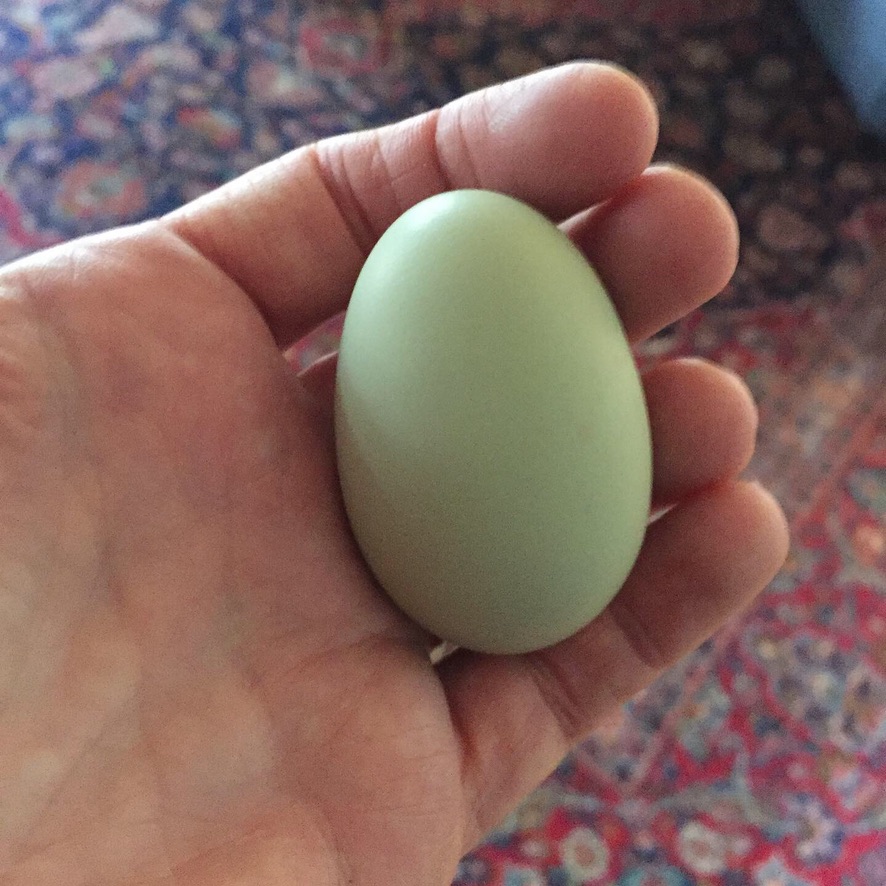
Like the egg my chicken Olive laid yesterday, I am so delicate.
Olive’s egg was no good. It was a tiny, slick, water balloon of mucous and half-formed orange yolk. Inedible, ugly, malformed, a gelid aberration.
Yet it was a weird glimpse inside the workings of the miracle, into the dark place that quivers and hides, one that’s not quite ready for full disclosure.
The egg membrane is like the private soul, and maybe we’re just not accustomed to viewing it so naked, so raw.
But I look at the egg and see the contents of a story, one that iterates a woundedness, or maybe just a vulnerability.
Nevertheless, I see a place deep inside, one that is imprinted with a fear of sunlight.
A me not quite ready to meet the world, a me that is afraid to be seen. A me that is afraid to face the violence of some kind of birth.
Years ago, we swam, the three of us, in a heavily chlorinated suburban pool, my sisters and me.
Somewhere around the ages of nine and eleven, back when we still inhabited our bodies and gloried in what we could do with them.
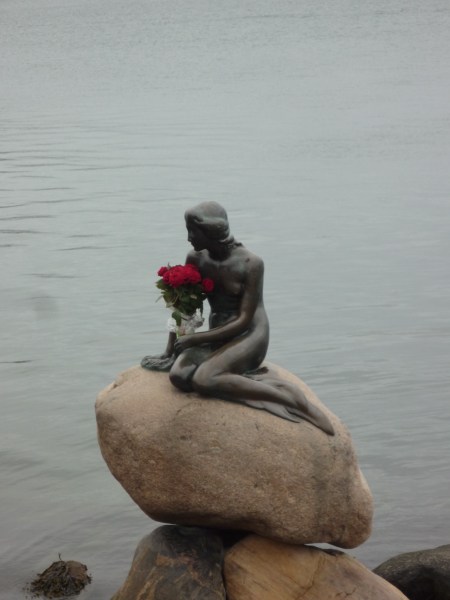
With our little melon tummies and chubby thighs, we would hold our noses and pretend to be mermaids, our legs held together tightly in a thrashing fishtail. And we would hold our breath for as long as we could.
It was a different sensation to have only one leg – but a tail! In a weird way, we could swim better!
We were strong and beautiful.
And we talked to one another at the bottom of the shallow end – in a strange dolphin language. Clicks and squeaks – we would try to decipher the words and end up laughing, and swallowing water until our snotty noses burned.
Years later – middle aged now, we swim circles around one another’s busy lives.
But I think we still remember that long ago sea maiden language that we spoke, and we believe that it belongs to us still.
Swimming pool memories – diving for pennies and other water games.
Like the new app we discovered recently – Marco Polo. It has been an unlikely tool to keep us connected in these pandemic times.
Like the swimming pool version, it involves a sort of call and response. We record a message that can be viewed at any time, and answered whenever we want. A singular moment stolen from our day – from inside a closet at work, or on the bus, even out in the chicken yard.
And like the swimming game, for me it is a shoutout to my sisters – while I might be blindfolded, unable to see where my voice lands, I can still sense that one of them is close by.
And I trust that they will hear the echo of my words, that they will let me close enough so that I can touch them.
I need their touch these days.
I think it has taken many years for us to remember the mermaid language.
In the past, we were distracted by our our need to be important in the family – we were insecure, our allegiance to our parents seemed more critical.
But now, there is is this singular, plaintive song that calls across empty space, and when it does, I go back there, to that time when we were wise.
We talk – one day, one sister is burned-out and stressed – another day, another sister is just needing to vent. And sometimes for me, sometimes I’m just lonely and down.
We have come to know the pain in our silences, and that’s when we shout out.
Sometimes we practice listening even when we just want to talk. We mirror the sounds of sadness, grief or insecurity.
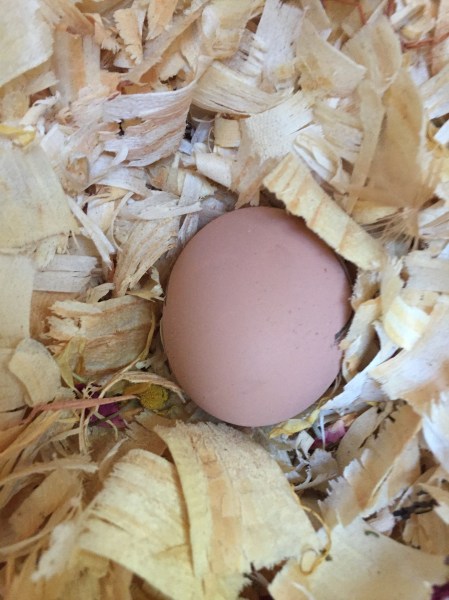
Sometimes we just record a silent moment of a sleeping puppy, or a clutch of fresh, brown eggs.
These are all ways that we attune our ears to hear, and really understand, who we are, and what we need.
So often we let the most important relationships slip away. We stay blindfolded, and scared – when what we really want and need is to be discovered, with full disclosure.
My sister Deb is a full disclosure kind of gal, the one who will say what the rest of us is sure as hell not going to say.
But when she called me out recently, I listened. I swam towards what was true for me, and we met again, after several years of distance.
She scares me. And she sets me free.
My other sister, Kath, the calmer one, will always lead with compassion. She has some idea of me that I really want to believe in. It’s been true since we were nine and eleven.
She sees me. And she sets me free.
I am so grateful to be that mermaid again – back with my beautiful mermaid sisters. And I know we will never lose our sisterhood. We’ve got our strength and tenacity, and most of all, our belief in this feminine triad that defines us.
It is a glittery pool of possibility – amidst love and loss, depression and illness and death.
But we are strong, and we keep swimming, sometimes even in the dark, but always alert to the calls across the deep water, and we know that we are loved.
Memories of a glorious fall in upstate New York, a slight crispness to the air. It is still too soon for the freshman to swarm the quad, but we are here early today because our son plays soccer.
We spend the afternoon unpacking his clothes, making his bed, arranging his few, carefully chosen items from home. His roommate has yet to surface, so tonight Lewis will be all alone in the big, Soviet bloc style dormitory. There is not a single soul in sight. Is there even a security person on campus?
My husband and I drive back to the hotel and lie in bed and picture our son doing the same just across town.
It is moving day.
He is moving into a new home. Smaller, more intimate and more his than any other place he’s lived, in a funny way.
It is a place he will call his own, and a place he will fill up with a new version of himself, one that has very little to do with Mom and Dad.
And now, years later, I think about another moving day. My father, after living independently, has decided, at 85, to downsize. This week I will drive up to West Virginia to help him.
He too, will take very few belongings with him. A few pieces of essential furniture, books, clothing, toiletries and linens but not much else, really.
His immediate life will be much smaller. And like my son, he will have an opportunity to re-create the space, the decor, even the shadings of who he will be, in the years ahead.
My son, my father. The rites of passage. The stepping stones across the river to another shore.
Both days so full of nerves and excitement and newness – I will be tired, and emotionally spent. And there is this feeling of uneasiness that I won’t be able to shake. What happens next?
Life is always about letting go. And even with practice, it never gets any easier. There is no guarantee that what you lose will ever come back to you. It usually doesn’t.
As a mother, my son leaving home felt like a tearing away of something in my chest. An ache, a soreness, that would come and go. I thought it would never heal. I spent the rest of that fall nursing the hurt, probing the source, confused at the severity. Humbled by grief.
Of course, our son did return home, but it was a bit like the cicada who shucks the protective exoskeleton and crawls out with fresh features. He was reconfigured in an awesome new way. Bits and pieces of who he is now were formed in those 4 years of college.
Often I wonder at the fact that maybe it is not time, but place, that molds us.
Often I wonder at the fact that maybe it is not time, but place, that molds us.
A seed pod, a shell, a womb, a hospital room, a prison cell, a trailer, a garden plot, a starter home. We take on the shape of our surroundings.
Anyway, my father will leave the home that my mother spent so much energy and joy crafting and tending. Where she lived and died. Only now it’s so apparent that the decor was really all her taste, not his. So what my dad leaves behind now is more of her and less of himself, I think.
And like the hermit crab, he will carry away what is his. His home is his own body, really.
His new apartment is lovely. It is small, but has an extra room for an office where he will be able to write. Maybe having a smaller space will allow for less distraction, more focus. I think he will expand and fill these corners.
And my dad will be a different man, because spaces change us. And I will think of him, from my own home in North Carolina, with the knowledge that the next space he inhabits after this one will be beyond walls.
And I think that’s why this letting go is such a painful deal. Ultimately, we can’t follow. We can only help with the transition and desperately wish for a postcard that will never come.
So going back to that night in Ithaca, once my husband and I had held onto each other and sobbed and finally settled into bed, my phone lit up on the pillow with a text. It was from Lewis and it said: You both did a great job.
To this day I choose to think he was thanking us for all of it, the rearing and the nudging forward.
But I know that that’s the other part of this loss: I believe we want to love with all our hearts, to love so hard that it hurts, like it will break us. Because to let go when we would rather cling is the hardest thing of all.
So traumatic that, in the end, we want to be told that we have done a good job helping to transport the burden when it was needed. And we want to make sure someone will do the same for us.
So thank you son, and thank you Dad. I am grateful to have shared a part in your moving days.
Well, originally I’d named her Cricket. Because she has a very plaintive, persistent chirp that dominates the chorus of the other chickie babies.
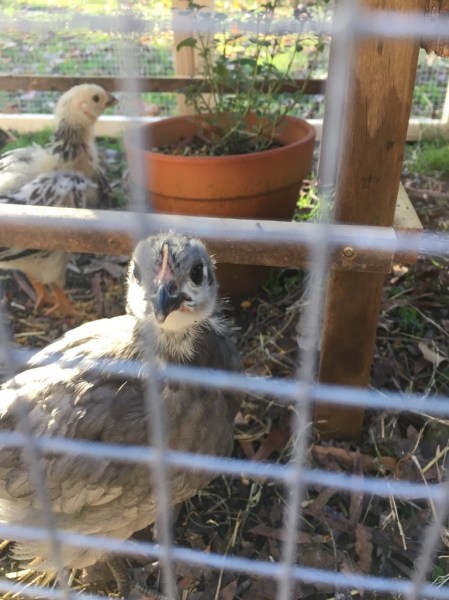
She can be pushy, rude and even mean to her sisters. The kind of gal who swoops over and pecks at the eyes for no reason. She stirs up trouble, creates kerfuffles.
So we started calling her Ivanka, as a joke. The unfortunate name stuck.
Still, I was not feeling much love for her.
But then, one day I noticed her wings were looking bad. She had glaring, bald patches. The skin beneath was a raw, angry pink color. All at once, she looked like a cat had eaten her and spit her out. Seriously ugly.
And the more bedraggled she became, the meaner she got.
And that’s when I started to feel sorry for Ivanka. Vain, self-centered, power hungry girl.
I tried to hold her and comfort her fragile-feathered ego, but she wasn’t having it. Damned if she would admit to not being the belle of the ball.
Because, you see, chickens have this thing called a pecking order and Ivanka was battling it out in the primaries with Fiona for the top position.
I was rooting for Fiona.
Anyway, these chickens are my Zen Masters. They teach by example. They coax me into understanding the nature of the world. In this case, the ways of love.
How and why do we choose the ones we love? We choose what is easy.
We love the cute fluffy, cuddly, yellow chicks who nestle into our palms with contentment. We love the eager, frisky attitude of the young pullets who scurry to us for feed.
We love the adult chickens who let us hold them and allow us to bask in a sense of companionship and trust. We love the girls who give us eggs, compliant and generous.
But what about the difficult ones like Ivanka?
So this is the Zen: maybe we learn more from those that are problematic rather than the loyal, adoring ones.
And now I think of this when I deal with Ivanka. Sure, I want to muscle in and overpower her and woo her to my side – but that’s not what’s required. If you know chickens, you know that doesn’t work.
So, over time, Ivanka’s feathers rectified themselves. She now has gorgeous peroxide-color plumage, with a lacy black decolletage. She is finally ready for the debutante ball.
And that’s how I see her, as a slightly neurotic, insecure young lady. But she is smart and I have high hopes. Because she’s Ivanka – a bit like her namesake – the bottle-blonde, ambitious and powerful political force.
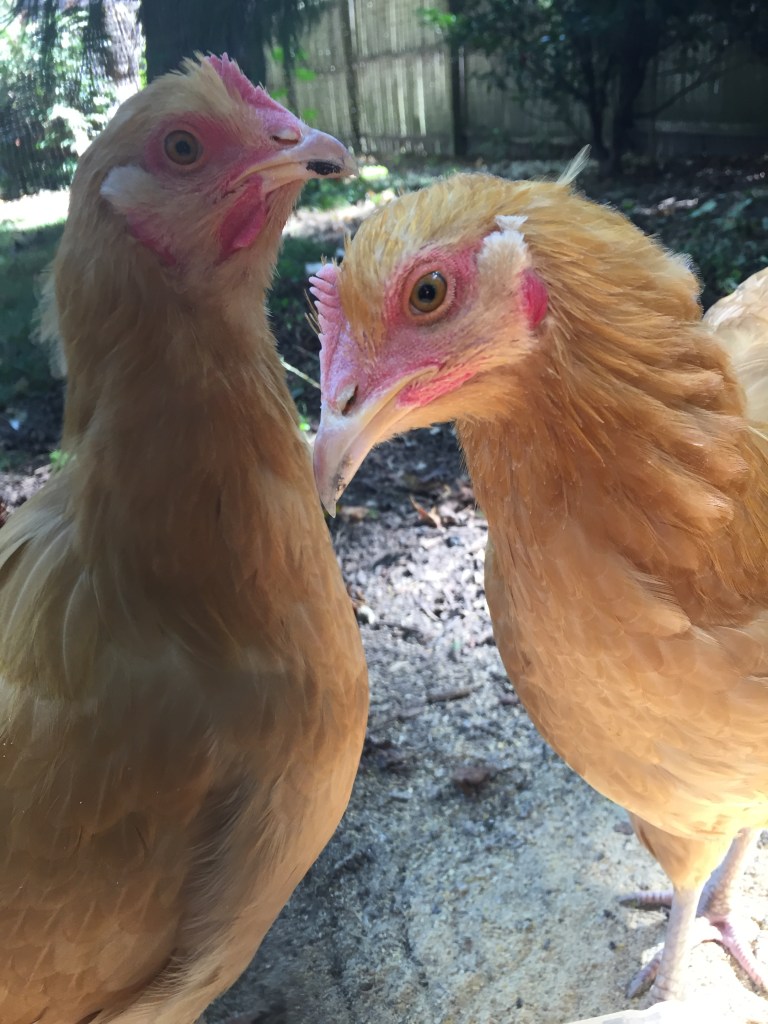
And what’s funny to me is, she is an incredible breed of chicken – she is a Colombian Wyandotte. A beautiful heritage specimen who makes a great layer.
In my mind’s eye, I see her at her best chicken-self. Yes, the top of the order, but beneficent and wise. She will rule with firm kindness, even though there may be times of necessary toughness, not always a pretty sight in the chicken yard.
But that’s OK. I love her, and I’ll just need to rein in my aversion, and make room in my heart for Ivanka. Take the bad with the good.
At Thanksgiving we had our little stunted celebration in the backyard. My son and his girlfriend, my husband and I, we huddled in our coats, with our lawn chairs spaced out judiciously. We wore our masks. Just another staged pandemic family holiday.
And after the apple pie was consumed, I handed out my little party favors. This year, a handful of fluffy chick for each guest to hold and keep warm. A peeping baby bird to snuggle in the palms of their hands.
I thought it would be fun. I’m attempting to socialize these birds, and what better way? We may not be able to cuddle our loved ones, but we can love on a chick.
Remember when we were kids and we all got those goody bags at the end of the birthday party? We would tote them home as little souvenirs from the party. Often they were lackluster – cheap, plastic toys or a bit of candy or a silly whistle.
But what mattered was the thought. The tiny tokens were a way of remembering the event, capsulizing the moment, in a gracious gesture.
Holidays during this pandemic also feel a bit like that takeaway prize. But the problem is, we aren’t even allowed to experience the actual party, instead we’re forced to make do with the scrap of what remains.
We must use our memories to call upon the fuller experience, to imagine and just be grateful.
Anyway, today I spent a few hours in the yard, watching my four baby chicks scratch and bathe and peck around inside their new enclosure. Since the days are warm, I can let them out in the fresh air for a few hours.
My baby chicks, my live party favors.
I scrutinize them, their funny antics. The sun is a big heat lamp for them, they move towards it and roost in the warmth. And they hop and fret, jockeying for position near the green clump of parsley I have pulled out of the dirt and dropped into the pen.
I sit and ruminate on them. Vitality, freshness, cheek.
They are not the party, they are the side dishes.
But still I think that they are also the real-life prize. These cheap, throwaway birds are actually the main attraction. They are what will remain when the dust settles, worthy of prime time.
I mean, once the virus is under control, I will be here and so will the chickens. The small animal bodies are true life, real. Maybe more relevant than anything else here.
So anyway, the sun warms my cheeks and I marvel that it is December. I’ll take it as a gift. Like the chicks, I grab that patch of sunshine and let it leech into my bones, let the Vitamin D saturate the corpuscles in my blood.
And I hope that my body’s reserves of endorphins will get me through this long winter of scarcity – with its small tokens of human contact. And I’ll pray that a boost of grace from my party favor chicken babies will get me through.
Hope is the thing with feathers – That perches in the soul – And sings the tune without the words – And never stops – at all –
And sweetest – in the Gale – is heard – And sore must be the storm – That could abash the little Bird That kept so many warm –
I’ve heard it in the chillest land – And on the strangest Sea – Yet – never – in Extremity, It asked a crumb – of me.
Hope. The thing with feathers.
The brilliant poet Emily Dickinson wrote this. And it is a poem that most people know, but one that could be dismissed as quaint, or naive.
This morning, a day after the election, I think these words are meant for me.
A simple metaphor, yet perfect.
As the urban chicken farmer, I can see this thing that Dickinson describes. A small bird, that flits and flies – is here and gone, within a moment.
Flighty, inconsistent, mostly wild, hidden.
Yes, it is so easy to let cynicism and rationality overtake the mood. But I think it the braver thing, the harder thing, to consider the birds, the feathers.
To let this moment rise.
The bird may never be the strongest animal but it is here and now, for this day. And as the poet says: it asks not a crumb of me.
Because really, what does it cost me to put aside my tired cynicism?
We are all trying to believe in a new promise for our country. And today, as I walk the stone path through my backyard, back to the chicken coop, I know that this hope is a light, gossamer thing.
If you know birds, you know the nature of fragility and outcome. Faith, and lots of scattered feed, and then a prayer and a letting go.
And so, today I choose to let my heart lift with the birds – yes, they are inconsistent and flighty – but what’s the point otherwise?
It seems to me that negative thinking and critical analysis only clips the wings of a creature that wants to ride the thermal winds to see a distant ocean.
To be free.
Oh, to see that world from where I perch!
And to imagine another distant shore, another place to lay my head and fold my wings.
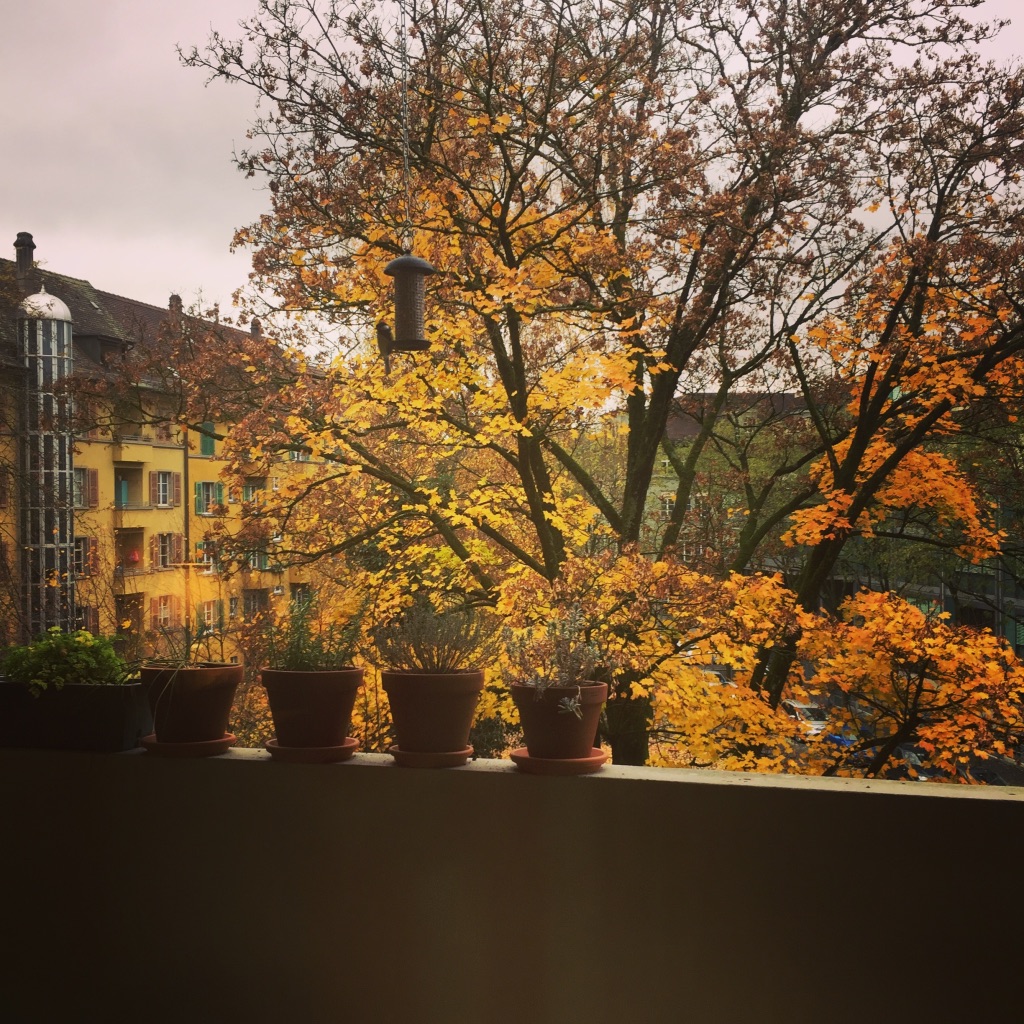
Sitting on the front porch swing, sipping a glass of white wine as the sky darkens. A crispness to the air on this early November evening.
Across the street at the Methodist church, a lone figure is setting out paper bag luminaries along the sidewalk, preparing for some kind of ceremony.
A wedding? A funeral?
The ritual and the wine warm me. And as the man moves down the neighborhood block, it strikes me that we are all setting out our little lanterns these days – we light a spark in the direction of some sort of hope, to keep up our positive energy, to keep going.
And we watch and wait.
From our darkened porches and near-empty houses, we wait.
The row of white paper bags line up crisply, in a direction not always mapped out. Whether it is an ending or a beginning, it’s often uncertain, not always so clear.
My son turned 29 yesterday, on Halloween. At our small gathering, I was a tiny bit misty, and wandered around in the backyard, carrying the photo album, sidling up to people to point out the pictures of his birth.
I know, I’m that mom.
Anyway – no one was nearly as interested as I’d hoped – but for me it was all in the details. Those tiny remembrances that, if left unacknowledged, would go missing.
Like the fact that he was a scary shade of blue when he came into the world. Or that he had a golden halo of fuzz around his soft, perfectly-shaped head. Or the way he felt so light, but also solid. And how he radiated confidence from the very beginning.
The memories are mine to kindle. My little candle in the paper bag.
The memories are mine to kindle. My little candle in the paper bag.
And tonight I set them out there on my little patch of front yard, to say, this is the light, this is the goodness in the world.
And so, block by block, along the cracked sidewalk, I imagine striking another match to a candle in the neighborhood procession – the birth memory, a poem, a love letter, a kiss – just a small yes, in reply to the darkness that is so hard to see beyond.
Four of them swooped beneath the trees in the backyard, looking for worms.
Their cerulean blue wings were otherworldly and a startling contrast to the browns and oranges of the leaves in the rest of the yard. I like to think they were our own baby hatchlings from last summer, come to check in.
But they were gone in a moment, off to fairer fields.
My son also came by to visit in the backyard too, and like the bluebirds, it was a brief, but sweet, sighting.
And now, I cling to the tiny details: his newly long hair, his crinkly smile. In bed tonight my husband and I will dissect every morsel, like birdseed in our craws – did he say what he’s writing right now? Did he mention travel? Did he tell us when he’d be back?
Little crumbs, oh how we live off of them.
And I guess it will have to be enough, for now.
the small things become big things. I savor every contact.
I want to believe that I am appreciating life even more these days – the small things become big things. I savor every contact.
If this pandemic has taught me one thing it is this: I cannot control the larger forces that dictate the health of the world, but I can take things as they come.
We’re only here for a little while, and our mouthfuls have always been basically parting tastes of the gifts we will leave behind.
And for my chickens too. It occurs to me that they already know the truth of the crumbs – they hunt and peck for each tiny grain one morsel at a time. They realize that they can handle only one bite, not the whole yard.
These crisp fall mornings bring a sharp clarity to memory.
My daughter is about 4, and she is playing in the backyard of our old house. The trees are mostly bare, the leaves gone brown. They lie in damp mounds around the yard and we scuff our feet through them.
She is in love with the pecan tree, or rather, the fruit that falls from it. The nuts lie huddled in nests in the grass, partially hidden around the fence line. They have striped shells, like tiny rodents, oval and hard.
Her little baby teeth can crack the shells, and so she does. Bits of pecan splinter away from the innards. She can never wait for me to crack a nut properly, her small pink tongue probes the meat before I can grab it away.
Her cheeks are pink, her skin a perfect cream, they are a palette they will never be again.
Her cheeks are pink, her skin a perfect cream, they are a palette they will never be again.
Her eyes so bright, her face clear of any emotion, except maybe a simple, lazy contentment.
I imagine that my child is a bit like the pecan itself, a soft, symmetrical outer shell with dark, yet tender insides. Curious, complex, at times tricky to access, but oh, so worth the effort.
But my daughter’s carapace was not fully hardened and tough back then, time alone would take care of that.
Anyway, I now see that we took those trees for granted. We thought just about every family had pecans like ours. That every yard was home to them.
In our new yard there are lovely trees, a poplar, several pin oaks and even an ancient mulberry that might offer up fruit for jam, if I weren’t so lazy.
But no pecan tree.
And this time of year, I think of my daughter and remember her love of nature – bugs, kittens, butterflies. And her relationship with the special tree that surrendered its seasonal gifts to her.
And, as I am thankful for the memory of that old nut tree, I am filled with gratitude for that long ago child.
I have plumped these girls up with special feed with added nutrients. Lots of good grains and herbs and mealworms and healthy fruit and veggie snacks.
They have basked in the vitamin D rich sunshine in the afternoons. I’ve even added scented lavender to their dust bath.
But these freeloaders haven’t given up a single egg. They need to pay the rent.
To me, the idea of an egg is a promise of a delectable inner richness, a fertile little bundle of creative ingenuity.
Something complete within itself. Something unique, self-contained, even elegant.
But, in reality, an egg is simply a vulnerable, fragile, inexpensive and throwaway thing, to most people.
In my research on chickens, I learned recently that when an egg is being laid, as it exits the hen, it is briefly coated in an invisible substance called bloom. The bloom seals the egg’s pores to protect the thin shell from bacteria and germs.
I like this idea, this way that nature contrives to send its most precious commodity out into the world with a built in safety seal.
The ordinary egg, but crafted with an almost magical elixir.
During this pandemic, I’d sure like to have some of that stuff – a little reassurance of protection. But a mask will have to do.
Our bodies are vulnerable to disease. Even so, I think of how perfect they still are. And how most of the time we are able to fend off as much as we do.
Sort of like a chicken egg, we have these permeable pores and scratches and even open cuts, where life reaches in. And nothing is certain. To live in these bodies we have to recognize our weaknesses yet stay confident in our strengths.
And so I try to come to terms with these feelings of ambiguous loss during this pandemic situation, knowing that there is no clear resolution to the problem.
Like the fact that I haven’t seen my daughter in 9 months.
the pores and cracks are also where the light comes in
Experts say I should grieve the losses of everyday life: being with family, friends, getting out into the world, hugging, touching.
And I have read that I should embrace the “both-and” way of thinking: that is, the situation is terrible, but it is also doable. Or, this situation is crazy, but I am not.
I should maybe lower my expectations a bit, and adjust to things being graded with a C – just okay, but good enough. Band-aids.
And maybe not be completely satisfied right now, but know that there are still simple joys that can fulfill, even heal me.
For me that is writing this blog. It is not great literature and I often don’t have anything at all to write about, but that’s okay.
I mean, chickens?
But still, it’s the writing part that brings me back to center.
To where I can feel more myself, and even a bit stronger.
Life is not perfect, my skin is sensitive, I get sick, I like to complain. But the pores and the cracks are also where the light comes in, as they say – where I am allowed the rare glimpses of wholeness, tenacity, even grit.
Anyway, I’ve had a long day today and my “surge” capacity is dimming – I’m sure you feel the same.
But I’m gonna keep on trying to write, trying to release some dopamine, and to attempt to feel like a competent human.
And to stay safe, not perfectly intact, but healthy. Healthy in the way of “both-and” – both grieving and coping patiently, in the same breath, and maybe even managing to be hopeful, every now and then.



 honeybees & reveries