pre-existing

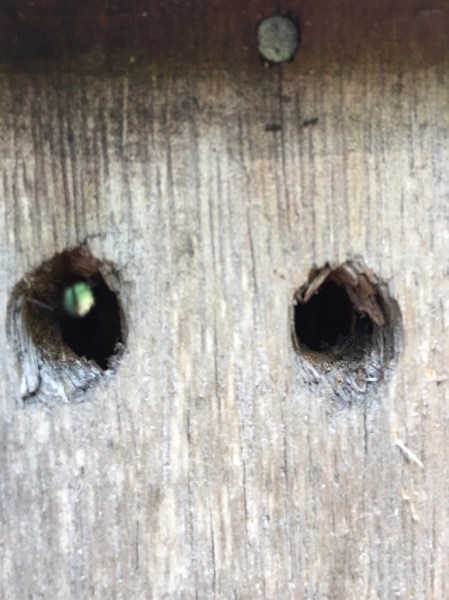
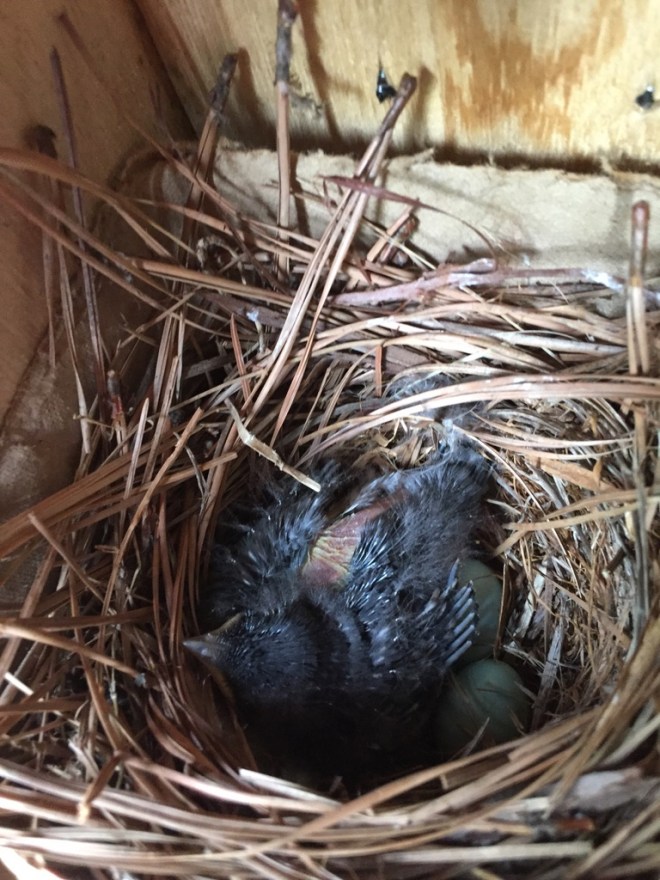
This morning I walk out to the backyard for my daily check on the Eastern blue bird box.

Each year I clean it out and hope and pray that this will be the year that eggs will come.

And chicks will emerge. And fledglings will quietly grow their brilliant cerulean plumage.

And each will poke a head out and take a first look at the new world, and they will be convinced that it is a safe one.

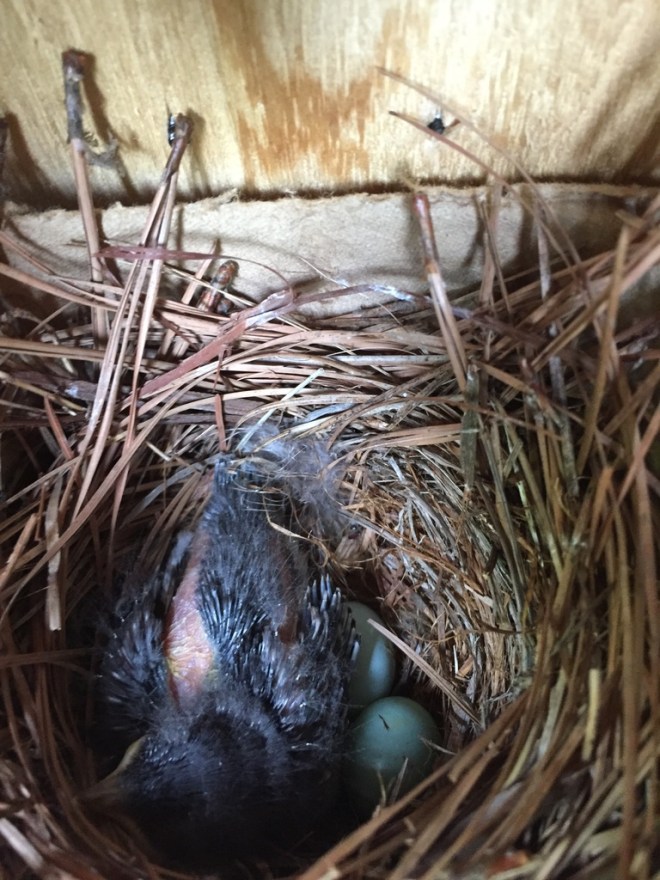
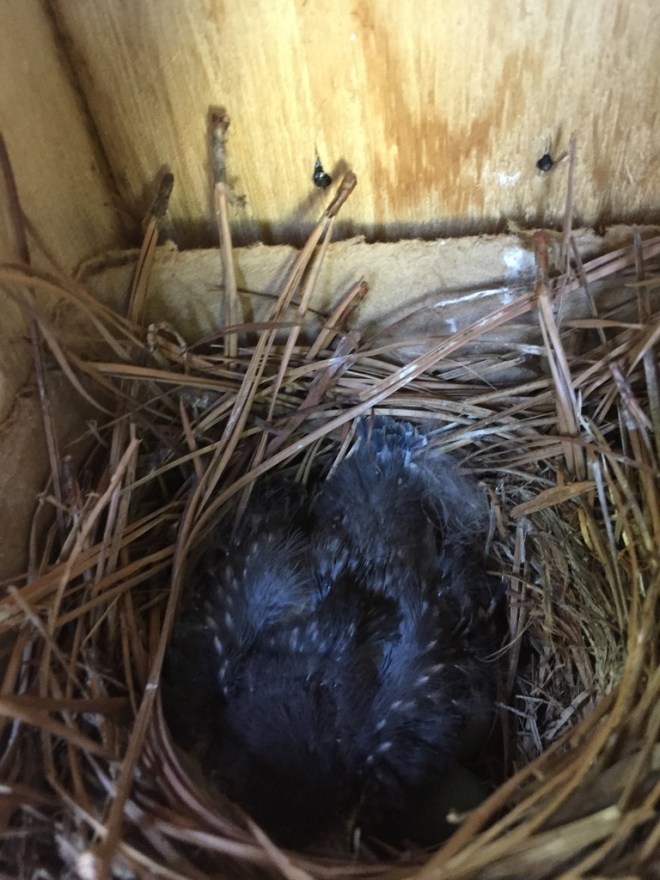
First they’re naked and blind. Then they become beady eyes from underneath mother’s downy breast.

And then they are able to peek through the tiny door.

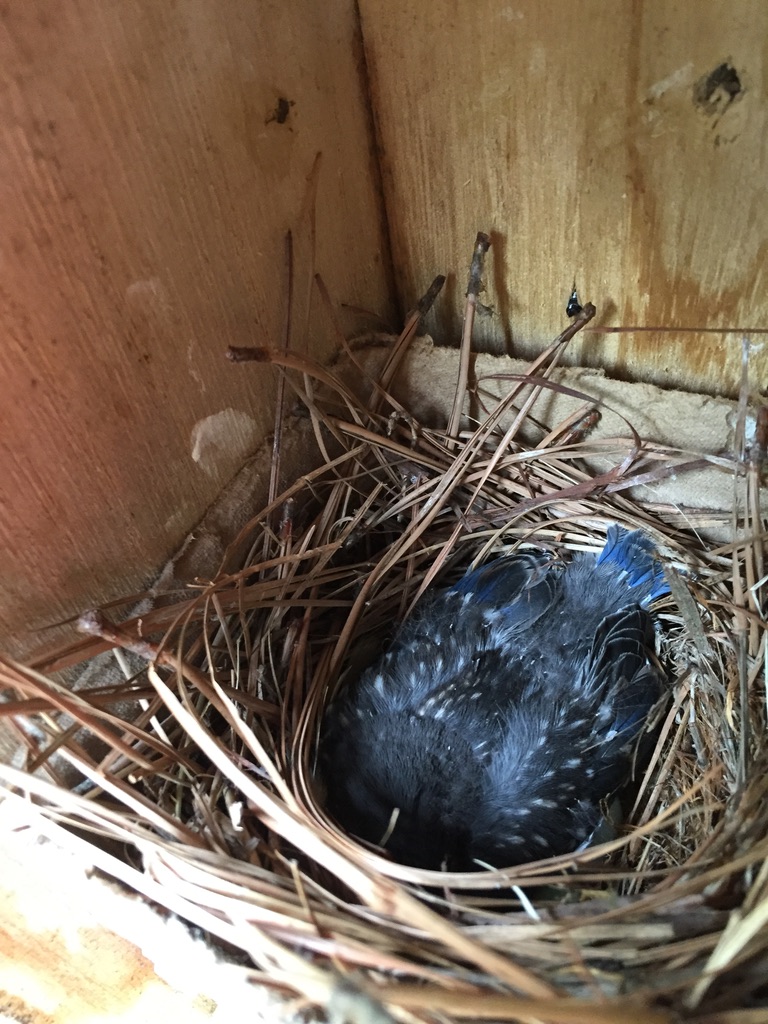
After several weeks they will take that courageous first flap. Usually a tumble onto the ground, and a flurried frenzy.

But then, coaxed on by mom and dad, they can alight on the clothesline or a nearby shrub.

And from then on, I don’t know, but it makes me anxious.

I see a story that could go either way.

Two options: life or death.

Survival or submission.

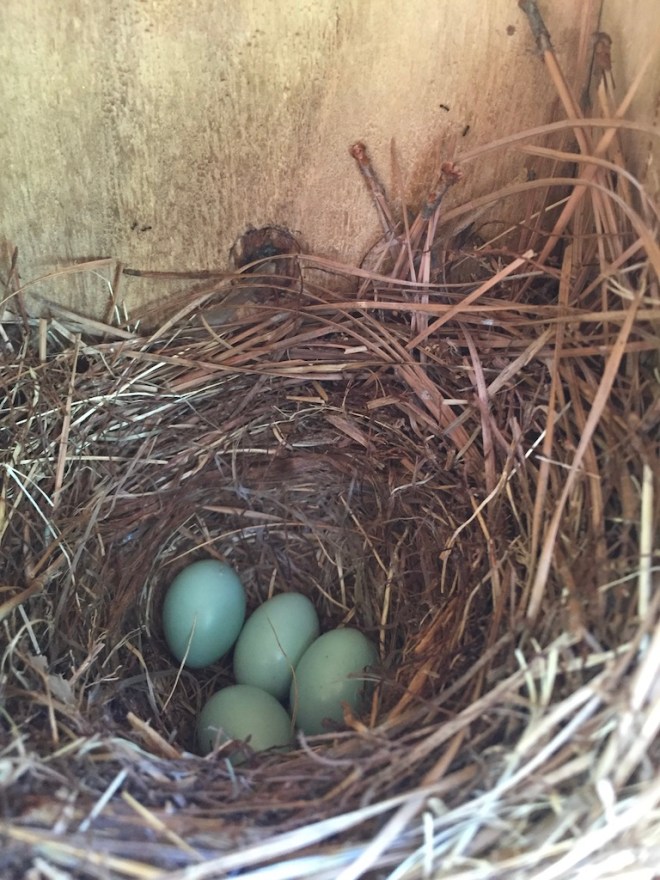
Fact is, there were 6 perfect eggs, and only this one goober made it.

I was sure the others were just late bloomers, but no, they were dead.

Dead as dodos – dummies, diseased, unfertilized, unviable, impotent, inept, gross, losers, whatever.

This is the one success story. For now. This one homely dude.

A few more days, and the rent comes due, and it’s time to catch a flight out of here. I’ll probably miss it, it’s quick as a blink.

Proud, shrieking parents, the teenager darting for open space. Orchestrated, pell-mell drama.

Or not.

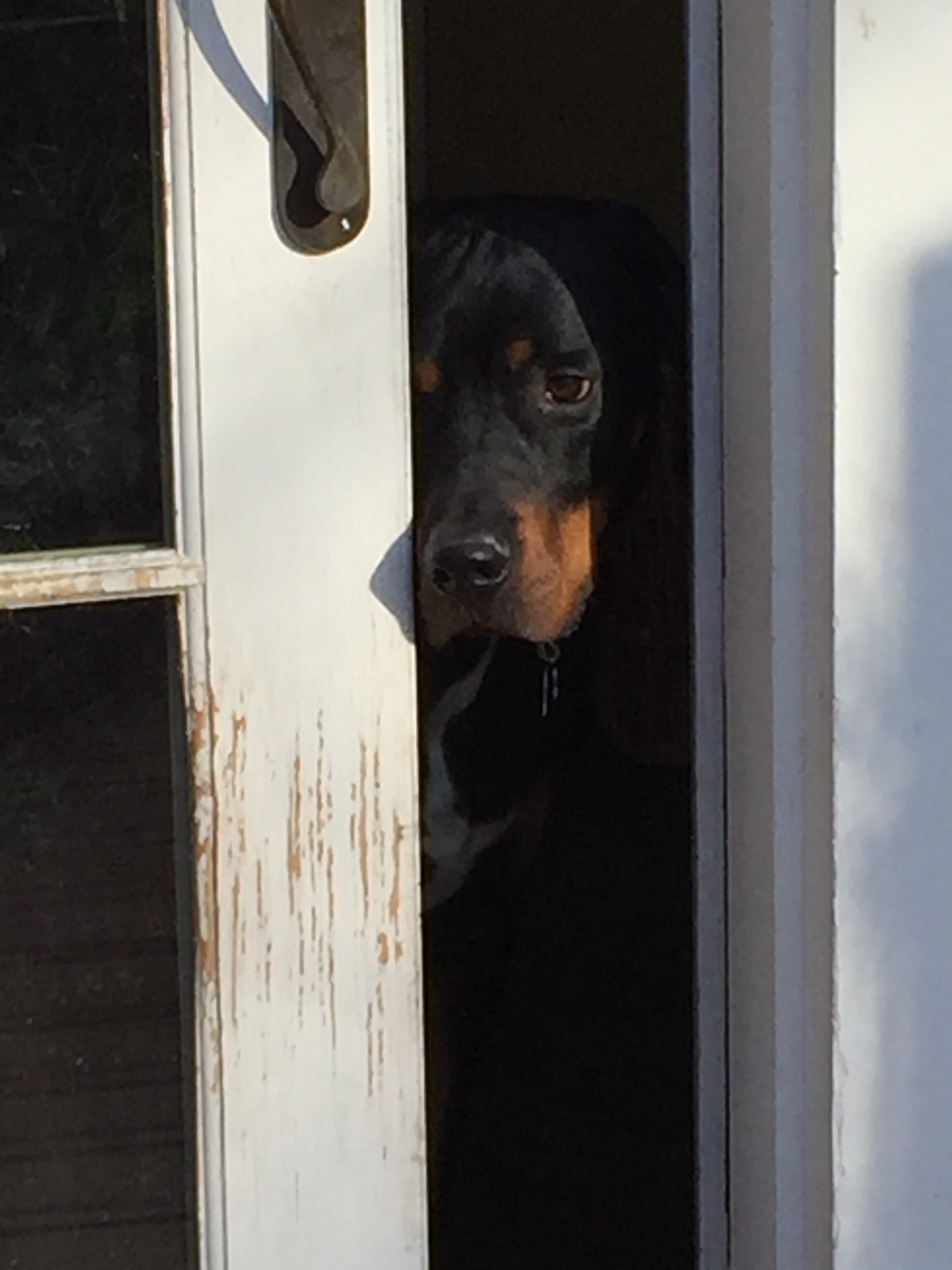
I might see my dog trot back from the bush with feathery turquoise jowls.

There have been many obstacles: fights with other birds for the nesting box. Bluebirds are shy and don’t stand up for themselves too well, they get bullied.

The specificity of the nesting materials – what the birds can find.

The availability of mealworms. And the weather.

There are cats, and hawks, and squirrels. All of them poach on the nest. Poached eggs.

It’s so easy to be romanced by the smooth, cyan eggs – the sweet potential, the perfection of design. So delicate and exquisite, but packed dense with balled-up chick.

Fact is, the gnarly little dinosaurs have stubbornly survived because of their horned beaks and their obstinate refusal to go extinct.

Evolving over millions of years, they are pre-history, Pre-human history, that is.

They are strappy, scrappy: their beaks scratch, scrape, puncture, poke, peck, peck, peck, again and again, shivs against their incubus prison.

They puff, fluff, fluster, muster, tussle, ruffle, muffle and kerfuffle.

They strain, pop, quake, shake, step, hop, hop hop again, and jump off.

And then?

Lately I’ve been thinking about the term pre-existing conditions.

One of mine is bipolar 2. It’s in my little DNA coil, genetically determined and individually crafted for me.

Beth genes waiting for expression.

At times I think I see patterns in my symptoms, but often they are completely random.

It is this fickle randomness of my own body that makes me think that life has never been a story I could control.

Our bodies, so miraculously designed and constructed, are also scattershot and absurdly random.

But we share one inevitable pre-existing condition: the fact of our mortality.

Death.

We know how our stories end, but still we fly.

We grope for the sunshine through the ragged peephole, and spy the blue, and we go for it.

We fumble, tumble and lurch.

Ideas waiting for expression. Compression, repression, impression.

A high probability scenario: soft wings torn away from tiny sanguine breast, a heartbeat skittering to a stop, a few rufous feathers left as tokens in the grass (the loss of lapis, my hope, my heartache). An ending.

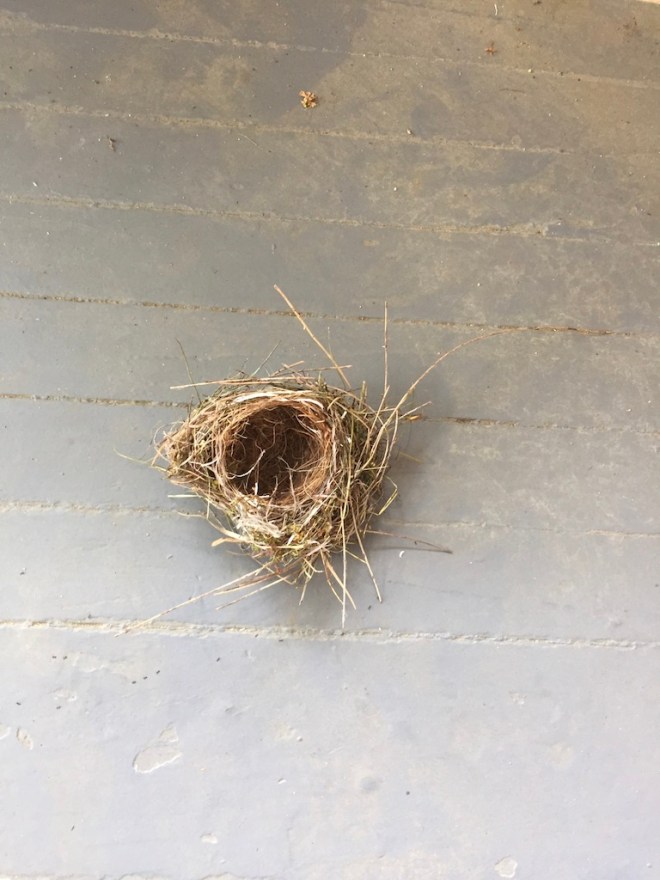
Anyway, afterwards, I’ll clean out the box again, remove the old nest and dispose of the dead eggs, preserved perfection, stillness.

And eggy bits, sticky with fluff and excrement.

And emptiness.

And I imagine wings of purest indigo.

And flight.


we all know how the story ends,

but still we jump.

I see you

I’m still trying to go out to run every day.

But it’s not the same.

It takes longer to clear my mind, relax my muscles and get into a flow. I just want to breathe deep.

I’m hardly releasing any endorphins – they’re depleted – along with the good snacks, peanut butter, and The New Yorker.

Running now has a laser focus. I must avoid other bodies.

It’s a strategic maneuvering to stay away from everyone.

Every one.

Kinda like a military exercise, twitchy and tense and adrenaline-fueled.

Or like a crazed interpretative dance, with hip-swivels, and sidestepping, and even complete “turn-around and go back” moves.

But if it’s a dance, it is one choreographed to the metronome of fear.

click, click, click. click

A Swiss clock.

A lock step.

A bomb.

These days we all want to get out – to be with friends and family.

To touch.

We know we are lucky, but activity feels so tightly censored.

Wariness.

Introspective extroverting.

Caution.

Today, a father lazily cycles in loopy circles in the middle of our street, with two young daughters trailing.

They shriek, and I notice the new chrome shine of their bikes.

Dad corrals them away from me, and they toggle off, with the neon handlebar streamers breezing in their wake,

There’s the grey-haired man with his elderly German Shepherd. He generously pulls the leash tight to his side, his eyes crinkling in a smile above his mask.

I see some neighbors taking their daily jaunt, I haven’t really talked to them in years. When did Kay go completely grey?

I pass a tall, beautiful Duke student, She has golden legs and her blonde ponytail bops cheerfully.

She moves over to make a wide circle, darting out into the road, gracefully.

Why is she happy? Why is she still on campus?

I love her pink tie-dyed headband. I want one.

I see a young couple. The man is wearing huge headphones, and he dances in broad, lunging, hip-hop type steps.

Knees wide, head dipping, his arms swoop like a crane taking flight. He circles her as she walks. And she smiles.

And I smile too.

I have seen all these people before.

And I have never seen these people before.

But the waves, the nods, the gestures, the smiles – they help fill in what has been scratched away.

They put flesh on the leanness of seclusion, they buffer the coldness of screens, and the dirge of media news.

They help me forget about the black scrim of our world’s despair.

At least for an hour.

I comply, making space, simply watching.

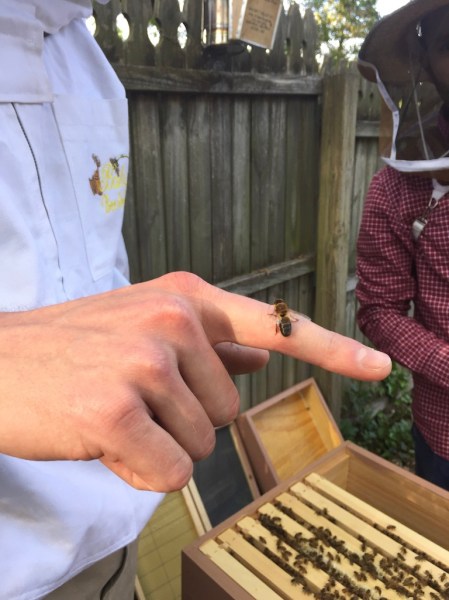
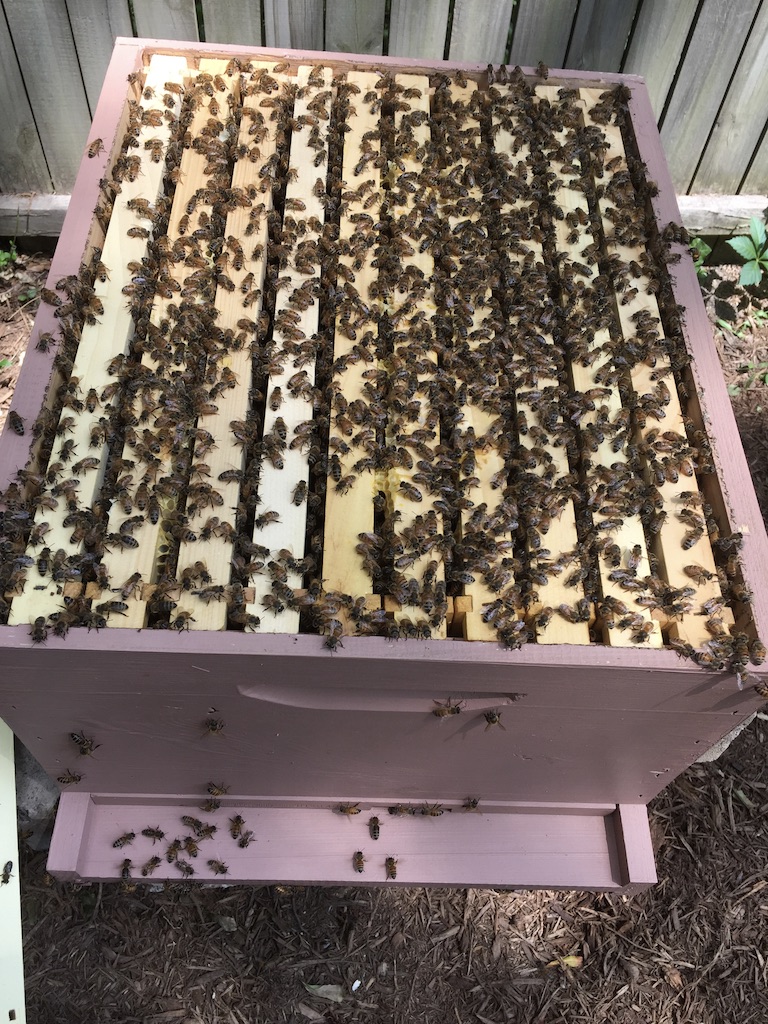
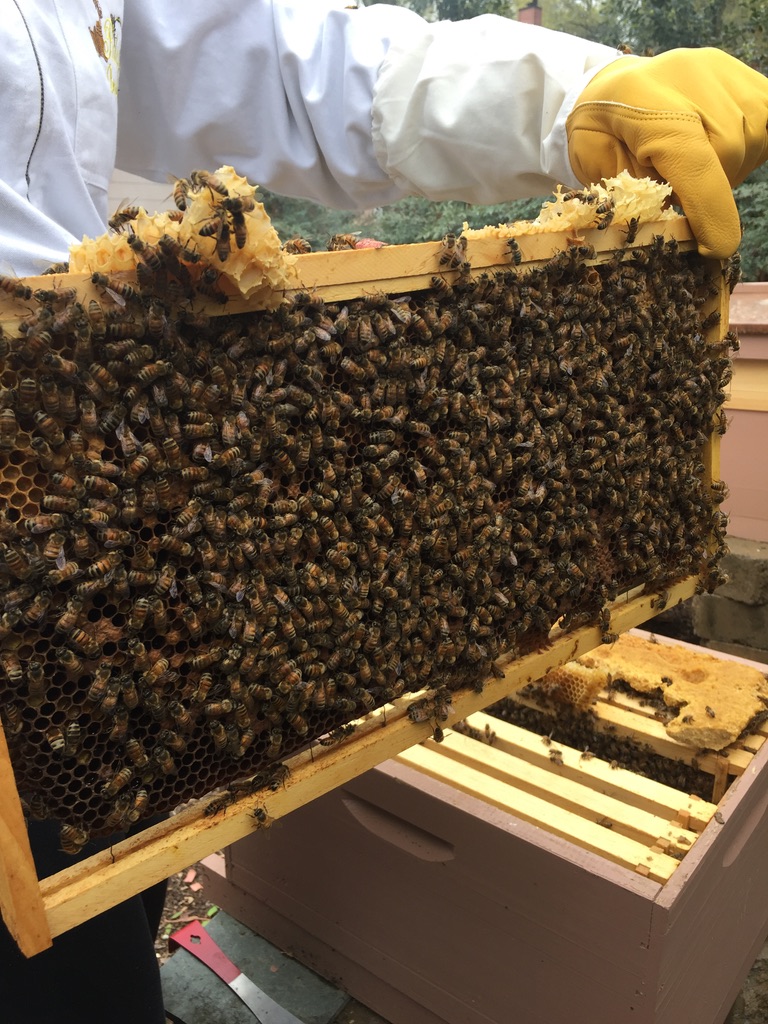
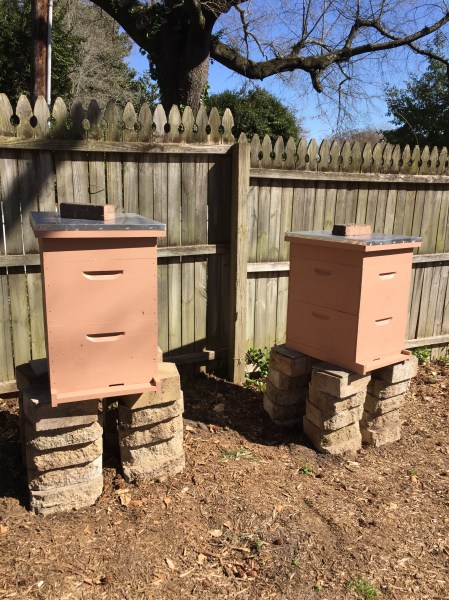
Back at home, in the cool mornings, the honeybees hunker down inside the hive.

I imagine them lying in rows of tiny military cots, packed snug, wing to wing. abdomens touching, as they twitch in cadence. They are getting ready.

Little stockpiled bundles of sucrose TNT.

I touch the side of the hive’s wood. It feels warm to my hand. Their circulation.

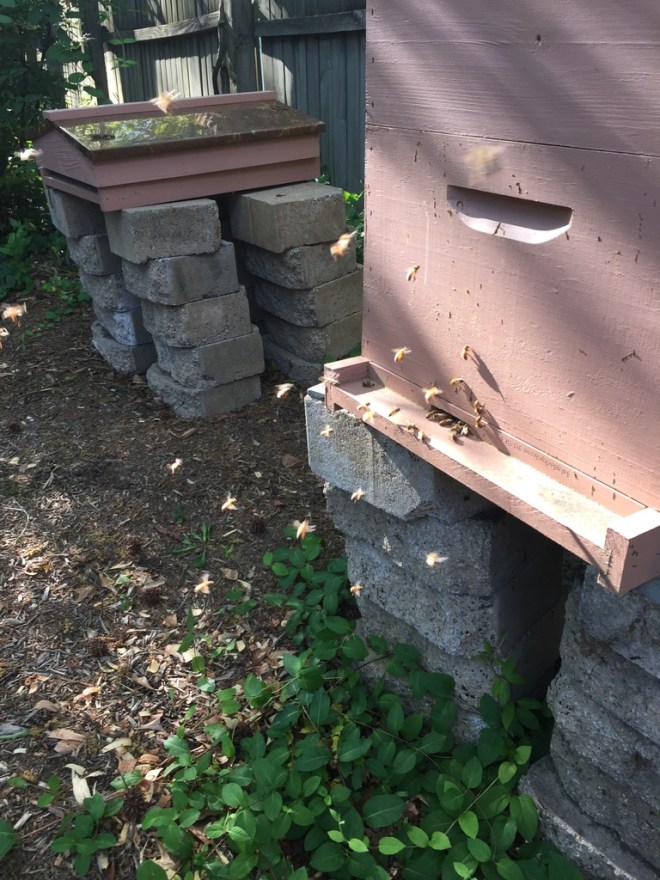
And later, in the afternoon, the Carolina sun hits the little hive full-on. And the gathering cone of bee bodies circles and dives and shoots off into space.

It’s breathtaking and weird.

They bumble and clump and make their way up the line, to the tiny slit of a door.

You go, no you go, after you, okay. Oops, I fell over. Doh. Move along, Oh, he’s dead.

It’s a bit scary – it’s loud, and kinda angry. They could absolutely swarm when they’re pissed. Memories of the Berenstain Bears.

They’re hard to track. Most appear identical. The word drone seems apt – agile, efficient and stealthy.

But then I see one that is slightly larger, and darker.

And one seems lost, dazed, it’s spinning on the ground. Dipping into the royal jelly? Pub crawl.

Of course, one lies dead.

My son told me there are undertaker bees, but which are those? Get one please.

Today the pollen is dark orange. Their back legs (and even front!) are furred with it.

The beauty in the funnel’s fury. The sober purpose in the chaos. The finely articulated flight patterns within the drunken revery.

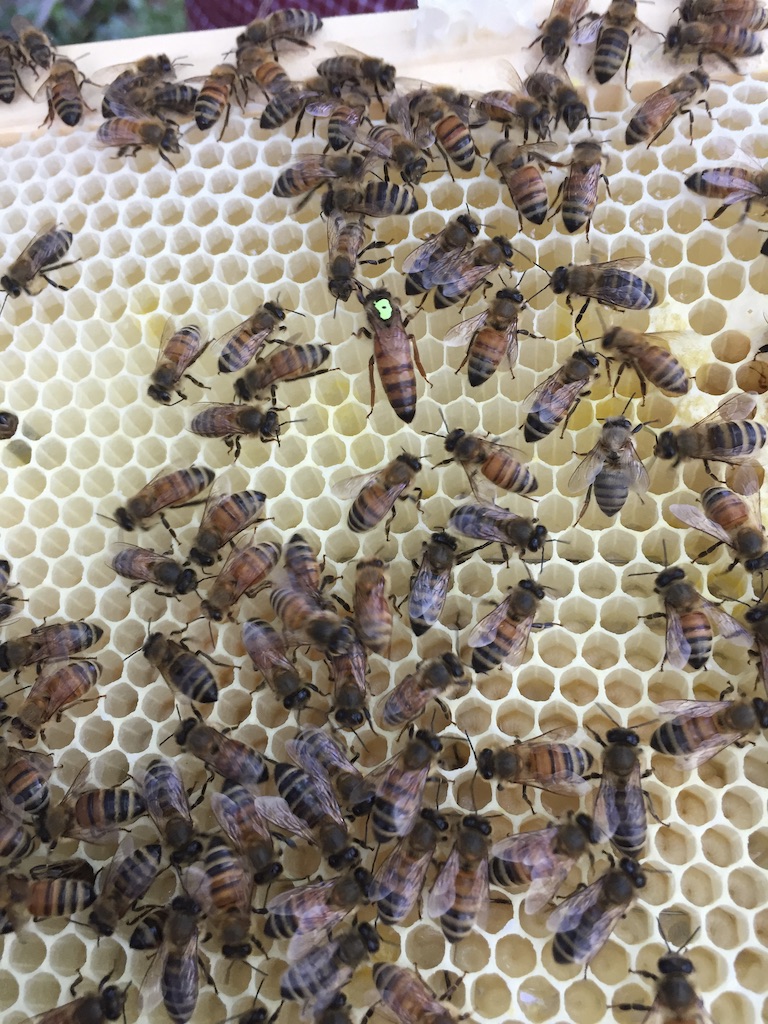
And I visualize our queen, she’s marked with neon green. Packed safe in the top tier (aren’t they always?)

I’ve only see her twice, because she can never leave.

She reclines, cloistered in the darkness of the frame.

With bodies crawling all over her. Uncomfortable, but coddled, well-fed, but tired, aging and what – wanting to escape?

But she has to stay. Imprisoned.

For the health of the entire hive.

For me. For the amber gathered on the rim of Summer.

If things go well. If we all stay well.

And now you, I imagine you, 

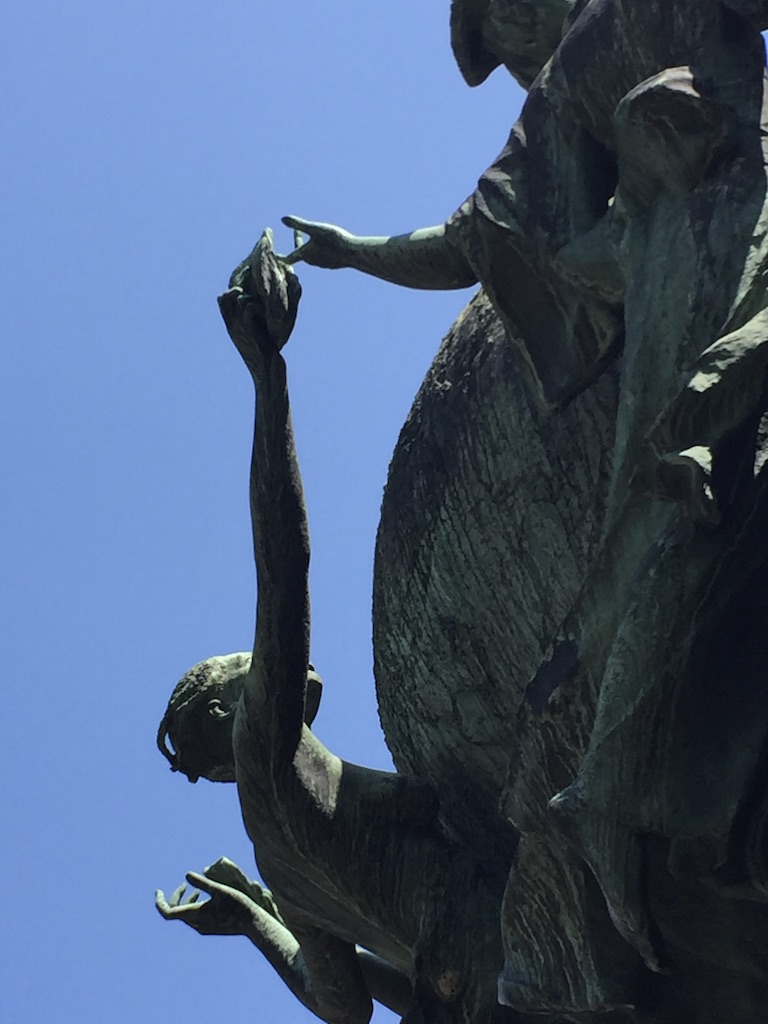
Untouchable, but still we reach.


conch


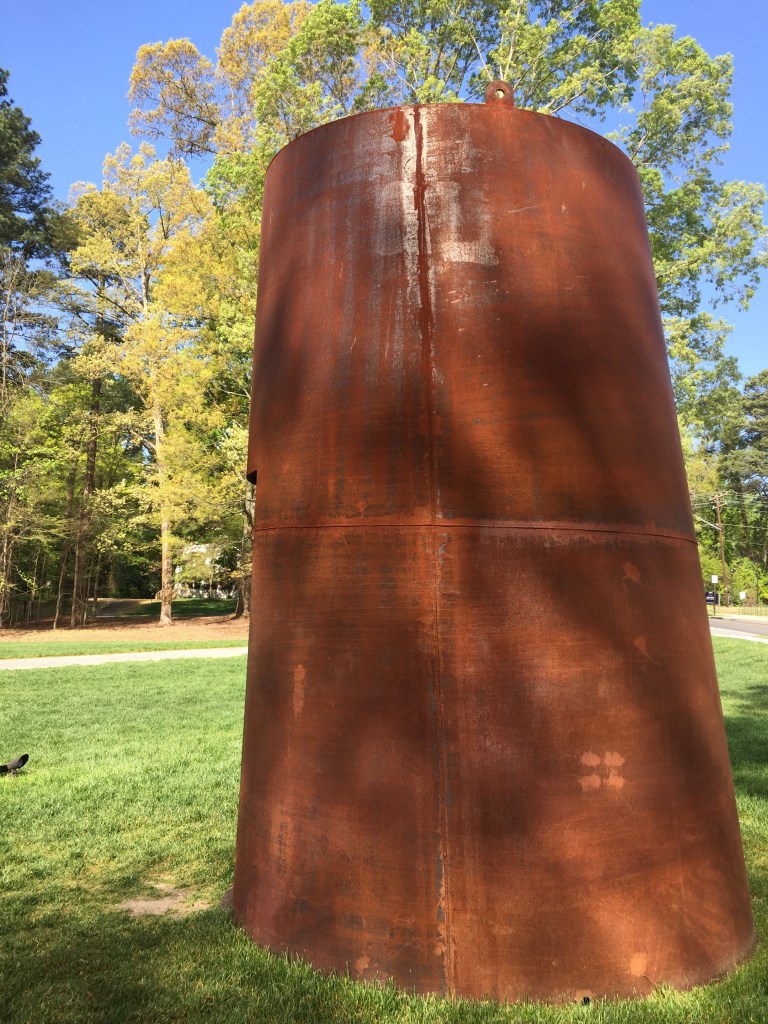
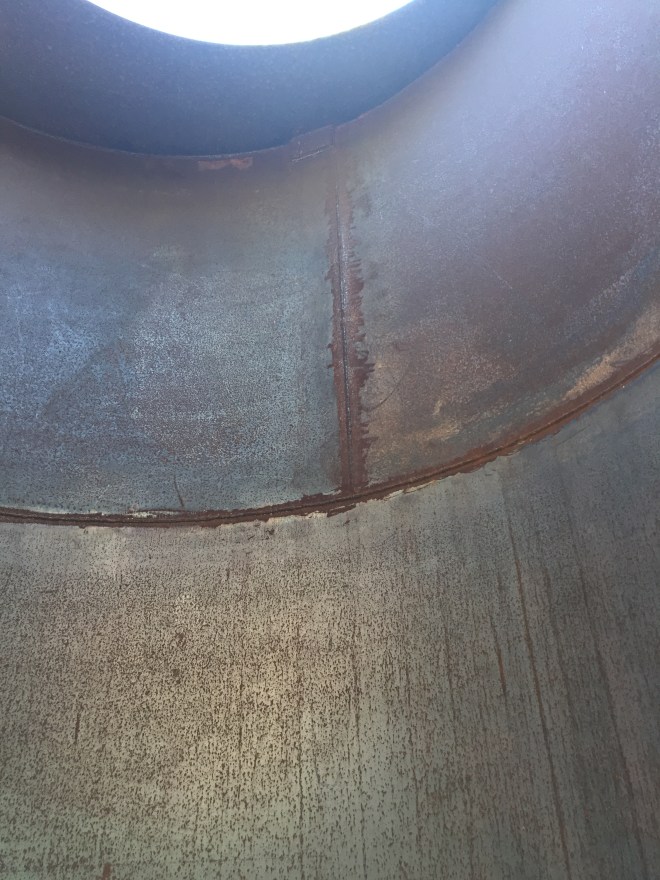
I sit with my legs crossed at the bottom of the rusted steel drum. When I thrust my leg out, my foot bangs against the side. It makes a deep, reverberating boom that thrums up my tailbone and into my chest.

I am small, cramped inside an echoing chamber of scratched-up metal that digs against my shoulders.

Music plays from tiny holes in the drum, a lilting scrap of surf and gulls, then a deep, mournful cello.

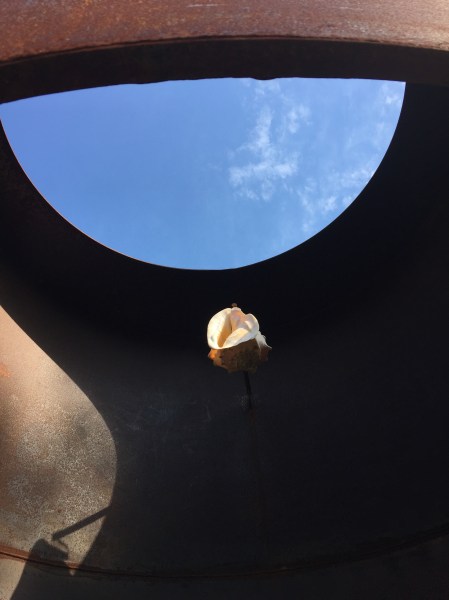
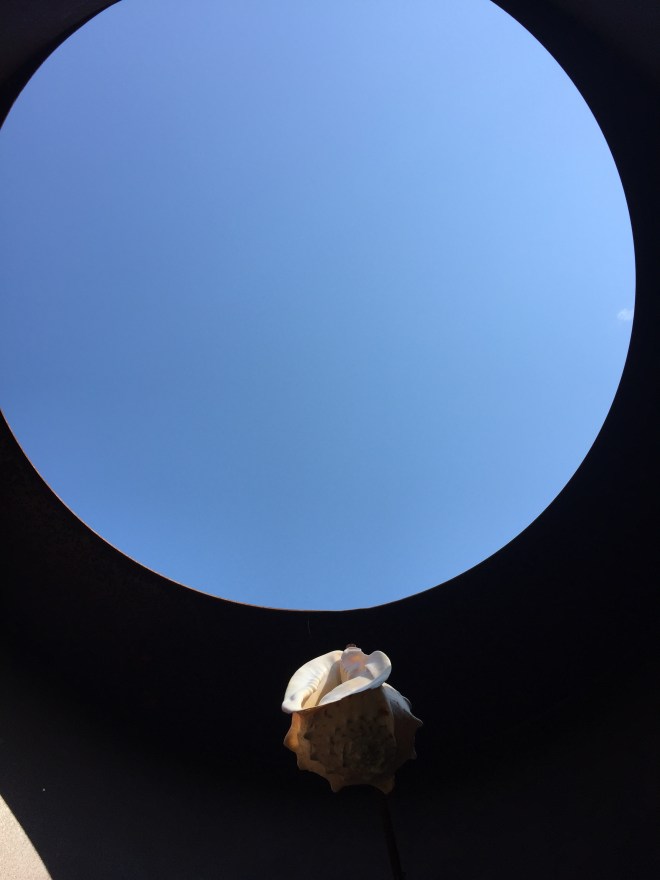
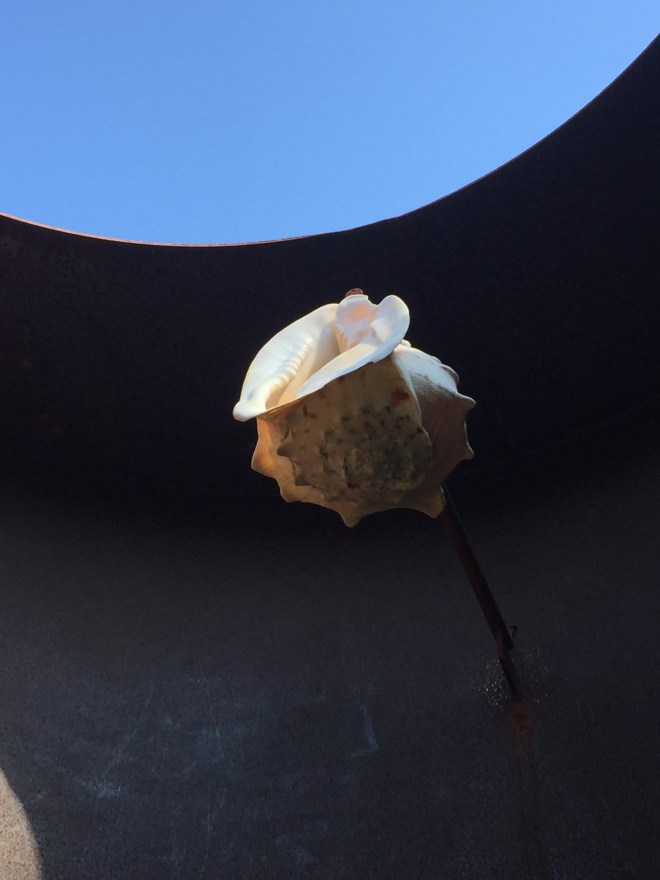
A conch shell is suspended in the space high above my head, I imagine holding it to the curl of my ear and hearing the music.

And then the cello gets louder and amplifies inside the vessel. My private moment that should stay mine, alone, ricochets uncomfortably.

The sculpture is Radcliffe Bailey’s “Vessel”, a representation of a slave ship from the 1700s on a crossing to America. It imagines what an African slave might have experienced in the depths beneath board, lying down flat, chained, one to another, in the bottom of the hold.

They do not see light, only blackness. They tap out rhythms to communicate with one another because they speak different languages. They sing bits of verse, call and response-like.

They can only imagine the sun and the ever-raging ocean all around them, sickening, storming, killing them by the thousands.

They have no sense of where they are headed. They are certain they will die.

A good number of them break free from the shackles to run for the upper deck, to throw themselves overboard. They give up their bodies to the open sunlight, to the shimmering waves. To die free.

I sit inside this installation and cannot imagine even a fraction of the horror, the debasing and de-humanizing cruelty that they endure.

It is Good Friday, and I think about these things.

I ponder the dark, I curl up in the silo of sadness.

These days we are staying indoors, sometimes bound in echoes of anger, rumination and fear.

Like spending time in this steel barrel, the confinement can bring security and introspection and a comfort that is necessary and familiar.

We introverts can stoke our spirits, nurture our imaginations and keep on doing what we do.

We can also feel caged, frustrated, extremely anxious and depressed.

We are vessels. We are a world within ourselves, and also of another. But like the ghostly whispers in the conch, for me, I’m not always sure what is real.

So on the days when I am able, I look up. And I try to block out the noise of the media, the chaotic panic and the shallow strivings of my useless ego.

And sometimes I can see a circle of sky within a holy apse. It is cradling the moon, or a dusting of stars, or a puff of cloud.

And today, I pray beneath the dome, for things I don’t even know. For hope, for health, for family, maybe for light in the darkness of the chambers of my broken heart.


 “Vessel”

Radcliffe Bailey at The Nasher, Duke University

lucid

The past few months I have felt empty inside. Bipolar disorder can sometimes have this effect, where I feel hollowed out, numb, a little bit removed.

Not sad or depressed, just empty. I don’t have an appetite, I can’t write or get creative with anything. I have literally nothing to talk to you about.

I fall into my books to fill the long hours. Anything to distract, to prod, to try to spark an ember of real emotion.

Or just to pass the time until my real life comes wandering back.

But when this happens, I dream. I mean, I dream.

In my dreams there are real life dramas going on, real people that I engage with animatedly, with backdrops that are alarmingly realistic. Highly detailed plots – gripping and true to the bone. When I wake, I’m exhilirated.

It’s like my dream world is where I am doing all the real living.

I used to think that it was a sign that I was going on an uptick towards a more manic state. Like, the engine was revving. I was a little bit scared, did my meds need adjusting?

But I’ve learned that it’s a kind of engine light that indicates that I need to pay attention. Since my daytime hours are so dull, I need to listen up to the other half of my life.

It’s too bad that I can’t remember all of the amazing connections and ideas from my dreams – I try to. Last night I lay in bed and attempted to pick apart just one or two threads that I could write about. Because the ideas were so fresh and unique, or so they seemed at the time.

Could they be crumbs of some ideas that I could write about?

When my daughter was in high school, for psychology class, she studied something called lucid dreaming. That is, she would wake herself during a dream and write it down in a notebook by her bed, making it as detailed and vivid as she could.

Trying to get as close to being inside of a dream while you are awake. In other words, illuminating the darkness of the subconscious.

I thought about doing that last night, grabbing a pen, but I was afraid I’d never get back to sleep. Sleep is a sacred thing for mental health. Not enough and your brain chemistry goes haywire.

Maybe I am depressed during the day, but not at night. What if my dream and wake states are swapped, like inverted realities?

Maybe I am living a complete life in my rich, fantastical night stories, and I’m merely resting from them during the day.

Maybe my lucid star shines most bright at night.

It’s a little like eating an overripe pear – the unexpected juice drips under my palm, and I have to turn my head to catch the goodness from the other side.

I’ll take whatever side the sweetness drips down.

Maybe my dreams are the breath of life to resucitate a worn out soul. When everyday routines stall and seize up, maybe the dreams kick in and say hold on a minute, remember this?

Remember the taste of morning coffee with lots of milk?

Remember the bees that came out yesterday, even in winter, with clumped yellow pollen on their fuzzy back legs?

Remember the beautiful bookmark your daughter made you that marks and separates last night from tonight?

Maybe that lovingly crafted gift was the pollen to my hive, the little push that sent my dreams into space. My thoughts of her tucked between my pages.

These dreams might be a kick in the shins to say wake up, you forgot to breathe, to smell, to notice.

So today I breathe. I look around the familiar kitchen, and hold the steaming chipped cup of tea. Nothing new in any of it.

But behind my eyes I am flying. I am hugging and crying over my sister, I am laughing with my psychiatrist, I am talking to my mom, I am holding my son as a toddler, I am remembering someone I haven’t thought of in many years.

All of these things happened just last night. And it was in technicolor.

And now today, I am seeing how the same colors hold up in the daytime, and if I can bring back that feeling of flying, so effortless and natural, so free, so unafraid.

Lucid and real and worth remembering.

And so I grab a pen and write.

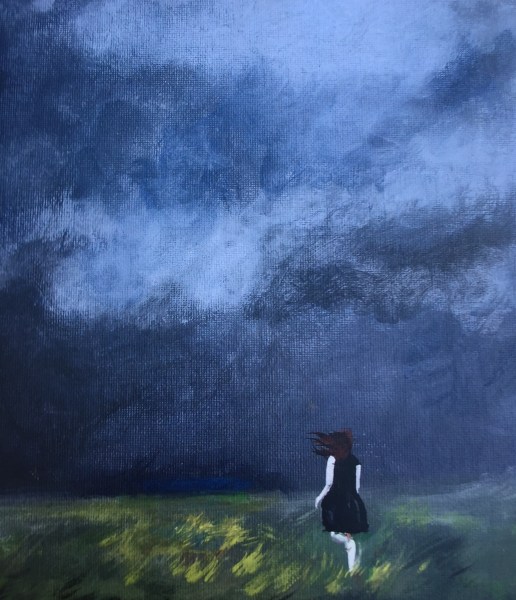
Cover art by LouLure:
"Nothing could stop her"

foot

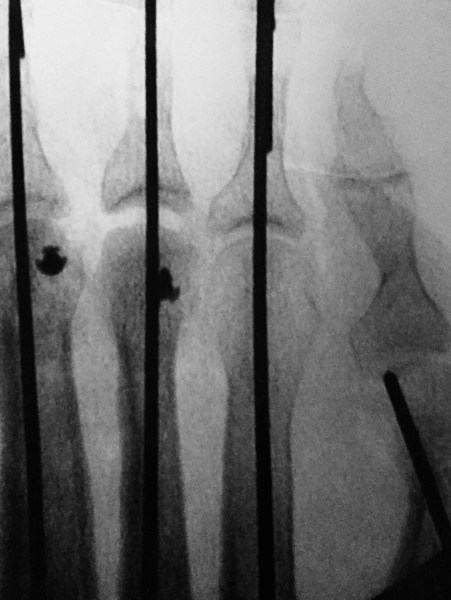
Last week my poor husband had surgery to fix his broken foot. He came out of the operation with multiple industrial pins hammered through each metatarsal and with some ligament repair around his big toe.

It will take several months for the wounds to heal, and then the pins can come out. The hope is that the connective tissue will regrow, and the torn spaces between the bones will knit back together.

When I look at it, I imagine the complexity of the brilliant design underneath the skin. And watching him hump around with his crutches, I’m reminded how crucial the toes and foot are.

The way the bones and joints move together, held by muscles and ligaments. It is an amazing architecture that bears our heavy weight as we walk and run and move through our days. Which makes the foot so uniquely vulnerable.

Grief is like this, I think.

When we lose someone, the death shakes the scaffolding. We are shattered and shocked, sometimes even unable to function. Emotions rip and lacerate our souls, as they drive down deep into our very marrow.

Day after day, the soft, vulnerable parts of ourselves continue to feel tender and bruised. Like a fractured foot, we doubt, oh we doubt, that we will ever walk again.

Some days we take a step or two, but the pain levels us.

But deep inside, the work of healing is taking place. The rent spaces reach toward one another to join, to weave together, cell by cell. Our blood transports new pathways. Our severed nerves lace together to heal.

It is a dark, unseen, mysterious process.

But it does happen.

The thing about a foot is that you can never forget it, it is there in front of your eyes with every step, every place you go.

So it is with loss, even when your swollen sadness subsides, it can never be forgotten, it’s always felt in a peripheral, but constant way.

Our tendons can be stitched up, but they will always be vulnerable. And so it is that we carry the memories of love, and of loss.

But then there is a new thing.

A thing both fragile but reinforced.

The other day I was running and stopped to cry because I was thinking about and missing my mom. Around the holidays, I always miss her so profoundly. It is an ache, like a phantom pain, because I can’t always pinpoint the locus.

But, as with an injured foot, I know how to push down the pain. And I can ignore the genesis of the grief itself, and just keep moving on.

Or I can just let the tears come, let the fractured bone of loneliness push into my muscle memory, allow it to gouge and ultimately cripple me.

And it does.

But this new thing, I see through a kind of x-ray of my interior, a captured image of my 57 year old life, my well-worn body.

I imagine empty black spaces, and darkness layered over with shadows. I see cavities of uncertainty, and even outright fear.

But there are also hard, bright, white bones and buoyant vertebrae. And pliant, flexible fascia.

Broken or whole, crushed, or pinned back together again, it is a body that holds pain without allowing the integrity to break apart irreparably.

I know I will never walk, or run, or move at all, in the same way. This foot, this grief, it walks with me, it carries this worn and scarred body.

And I think about about regeneration, recovery, and injury and repair.

And I will wonder at the strange, unfathomable ability life has to break down, and then somehow gather itself up, and then re-create something functional, and oh so beautiful, and altogether new.

to make a prairie

To make a prairie, it takes a clover and a bee

A clover and one bee.

And revery.

but revery alone will do

if bees are few.

– Emily Dickinson

revery: A state of dreamy meditation or fanciful musing; a daydream; a fantastic, visionary, or impractical idea.

Where to find those golden moments of inspiration? The sugared energy that sweetens and distills the lazy meanderings of the dull and depressed mind?

Because today my own hive-mind is dry, with dusty, crenellated tunnels that lead nowhere.

There’s no queen to muster up motivation, no encouraging brood mates, no honey to drip from the sticky comb as a reward from the day’s hard work.

Instead my brain buzzes lazily across the summer yard, trying to bring back something worthy, something of use.

Some piece of myself to add to the buzz of inane conversation all around me. Words that flit and fly across the yard, words to transport and transform.

All it takes is one bee.

But as every honeybee knows, we cannot fly without the murmur of breath beneath our wings.

Without the wisp of breeze, there is no circling with intent, instead we humbly crawl across the lawn, to be trampled by a foot or lost in the mounds of grass.

We want a purpose, we want a community to share our short but productive little lives. And a warm home for our tiny, fragile paper-wings to fold and rest.

And so we circle and fly, labor and die.

This is how it is to write.

why I travel

I travel to discover how huge the world actually is.

I travel to realize that it is not that big after all.

I travel to be an outsider, a stranger completely ignorant of the local dialect.

I travel to understand that there is a universal tongue: a smile, a nod, a small attempt by someone to help me find my way.

I travel to be a stranger, an American, carrying the weight of that stigma.

I travel to maybe show a different face of my country’s reputation.

I travel to sleep in a bed lovingly made up for me by the hostess of the house.

I travel for the sweet, weary moment when I come home and fall onto my familiar mattress in my own bedroom.

I travel to see the history of a city, one that is thousands of years older than my own.

I travel to appreciate my relatively new hometown, one that is small enough to recognize my individuality.

I travel to indulge my senses – to taste an array of cheeses: raw milk made of cow, goat and sheep, and bleu varieties injected with blue veins of famous bacteria.

I travel to spend weeks without seeing a fast food chain or box store.

I travel to let go. To ride in a taxi that stops and starts and careens across the Roman night, swaying and weaving in a dance between motorcycles, cars and pedestrians. I absorb the blur of color and light, letting my spirits fly and my adrenaline soar.

I travel to appreciate the calm and tranquility of my sleepy North Carolina hometown’s cadence.

I travel to take advantage of the fact that I am able to do it, that I have a husband and kids who push me along, sometimes beyond the limits of where I want to go.

I travel because I was luckily offered the opportunity through my husband’s work.

I travel to get lost, to reinforce the fact that getting lost can happen anywhere, in any city.

I travel to appreciate that desperate rescue, those arms that hold me tight as I shiver and cry because I can’t find the way back to our apartment.

I travel to be a part of a large, Italian extended family, to experience a meal that has been lovingly assembled over the entire day.

I travel to appreciate my blood family, with our peripatetic planning of quick leftover meals and sporadic get-togethers.

I travel to come upon an unexpected pomegranate tree, plump and red tucked beneath old, gnarly branches.

I travel to remember those same exotic trees when I shop – their weird, bumpy fruits in the small bin at Whole Foods, with the knowledge of just how far they have travelled.

I travel to see a region where life is literally squeezed out of ancient plants, plump grapes and firm dusty olives, slowly ripening on the sunny hillsides.

I travel to expand my own limited palate. The drip of different olives, sweet and green and musky black, and the assortments of wines from last year’s harvest of grapes.

I travel to better experience the bitter fact that over-imbibed, limoncello is a poison, no matter how yellowy sweet and innocent and pretty it’s colorful bottle.

I travel to validate the idea that what is shunned in one culture may be treasured in another. That the feral cats that we euthanize, are protected cat communities, in Rome, not to be disrupted.

I travel to do the things that people recommend for me to do, but also to ignore those dictums too. The Roman Coliseum is just as impressive seen from a hillside, without paying the the ticket price and waiting for hours to go inside.

I travel to do all of the kitschy tourist things too. There’s a reason why millions of people travel from far-flung places to experience them, after all.

I travel to shop for things I wouldn’t dream of buying at home: outrageously priced Italian shoes and bags, a handmade artisan candle in Rome.

I travel to give myself permission to be a more colorful version of myself: More chic, more cultured (quoting Fellini) and someone more gastronomically sophisticated.

I travel to make myself vulnerable: to always feel like I’m on my toes, alert, not completely comfortable. Maybe it might help with the aging process?

I travel to broaden my view of what the world can be. So when I am home, cooking, doing the dishes, or running on the trail, or just daydreaming, I can summon up memories.

I travel to somehow, in a tiny way, share a larger community in this wide, juicy, delicious world.

To venture out, to risk, with the hope that when I come home, completely saturated and sated, I might still be ready at some later date down the road, to go adventuring again.

I travel to lose myself, and also to find myself when I am lost.

seed

I am running around, trudging up and down the stairs, gathering items to throw into my suitcase for this next 2 week trip to Europe. How many times have I done this?

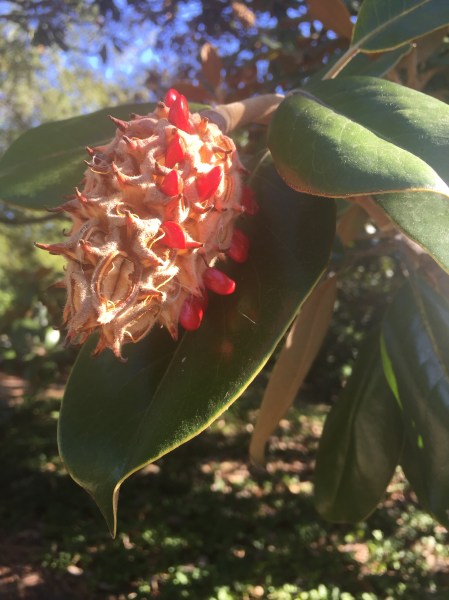
This morning I take a moment to turn my head to the window as I round the stair landing. Half a block away, and high in the sky, against the crisp blue, is a ball of bright, cherry red color. And it takes me a moment to realize what it is.

It’s the final fruit of the neighbors’ magnolia tree, those flat seeds that slither from the cone-shaped pods of the spent blossoms.

They are not really the last phase of the tree’s yearly effort, because the magnolia is a busy, showy specimen that gives and gives and offers up surprising delights all year round.

And each phase is distinct and unusual.

Of course I love the soft, limpid flowers in the summer – their lush creaminess and intoxicating fragrance – who could not? But they are short lived beauties. If you bring them inside they will become brown overnight and droop their musty heads in sadness.

And after that there comes the nut brown, prickly pods that seem to serve no apparent function.

Until the seeds.

They squeeze up silently, slipping from the ordinary stems and seemingly overnight they are pinched from the fuzz. I think they are seeds, but why in October?

And then the rough pods will darken and shrug back into the tree for the winter, and we think no more of them. But my, the green gloss of the waxy plant leaves, that cluster so perfectly, catch our attention yet again.

And soon it will be Advent and the mantle will need adorning. But even then, once cut, the cuttings will stubbornly list and fall in the most gangly and imperfect variations. But we love them anyway – their festive green color, their vigor, their ability to survive yet another year.

There is something so elusive and impermanent about the Southern magnolia that captivates me.

In the Spring, just as all things fuzzy and soft begin to emerge, so too the almost obscenely pink pods emerge. I reach out to touch them, they are like huge furry tongues, alive and fertile, ready to be awaked by the warmth and sun.

To me, there seems to be a metaphor in every bit of nature. It reflects our own moods, our own bodies and may even provide insight into the life cycle that we share more intimately than we know.

I know that tonight when I sit in the artificial, unnatural cabin of the airplane, borne off to a place far from home, when I close my eyes I will imagine the red seeds, how they caught my attention, even within all of the rush and worry of the day.

I will imagine them as bright cherry eyes, awake and alert, and waiting for my return home, for my pause, my notice and reflection. Because we are somehow connected, my eye and the little seed. And if I take the time to slow down, I know that the moment of observation can be ripe and full of possibility.

It seems like nature calls out to me, especially in October. Saying farewell to the bounty of Summer, that time that is ripe with all of the gifts that have unwrapped before my eyes, without even a careless thanks from me.

Gratitude means slowing down, paying attention, and reflecting on these red seeds and all of the tiny things that shine out with all of the power of Nature.

They are quietly waiting for me to discover them, for me to really take the time to try to see.